



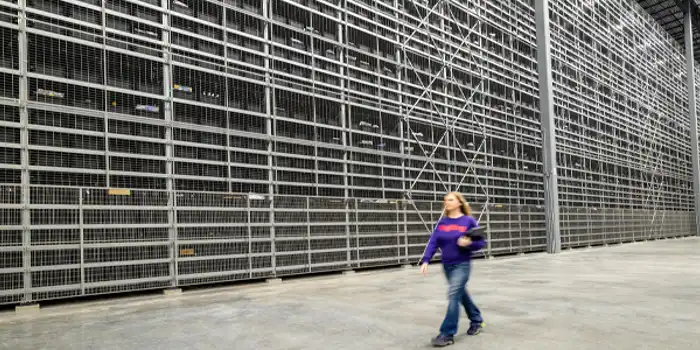

COGD: Obsolescence risks have never been greater
Obsolescence risks in electronics supply chains have never been as numerous as they are today, according to Axel Wagner, Chairman of the German industry association COGD. He points to shifting semiconductor strategies, geopolitics and trade restrictions, and calls on companies to manage obsolescence across the whole company rather than within purchasing alone.
Ad

Global chip sales top $1 trillion in first eight months of 2026
Global semiconductor sales have passed USD 1 trillion for the year to date, the first time the industry has reached that level, according to the Semiconductor Industry Association (SIA). August sales amounted to USD 159.7 billion, up 144.3% from a year earlier.

AI demand squeezes consumer MLCCs – opening doors for Chinese suppliers
Japanese and Korean MLCC makers are cutting supply to the consumer market to prioritise capacity for AI applications. The shift is opening doors for Chinese suppliers, several of which are now undergoing qualification with global brands such as Dell, HP, ASUS and Acer, according to market research firm TrendForce.
Sponsored content by Evertiq AB
Evertiq is looking for a Sales Specialist in Poland
We are looking for a Sales Specialist who enjoys talking to people, building relationships and opening new doors. You don't need years of experience in B2B sales – what matters to us is that you are proactive, comfortable reaching out to new people and don't give up easily. You will work with companies across the electronics industry, helping them promote their business through advertising on Evertiq and participation in our industry events, while gradually building your own customer portfolio. We are looking for someone who wants to grow with us, learn the industry and actively contribute to Evertiq's development.

GigaDevice boosts market reach in EMEA and Southeast Asia with Rutronik
Chinese semiconductor manufacturer GigaDevice has signed a strategic franchise partnership with German distributor Rutronik Elektronische Bauelemente, covering EMEA and Southeast Asia, including India. The agreement gives customers broader access to GigaDevice's microcontroller, sensor and power management portfolio.

SEMCO raises MLCC prices – signalling industry upcycle
South Korean MLCC manufacturer SEMCO has raised prices for OEM and ODM customers for Q4 2026, marking a departure from its previous practice of limiting price adjustments to distributors. The move signals that the MLCC industry has officially entered an upcycle, according to TrendForce.
Ad
Ad

Murata starts construction of two new production buildings in Japan
Japanese component manufacturer Murata has broken ground on two new production buildings in Japan within the space of two weeks, adding to a capacity expansion programme that saw a third building completed in April. The new facilities will produce thermistors, chip inductors and noise suppression filters.
Huawei proposes Tau Scaling Law as successor to Moore's Law
At the IEEE International Symposium on Circuits and Systems in Shanghai on May 25, Huawei presented the Tau scaling law — a new principle for guiding semiconductor development that the company proposes as a replacement for Moore's Law, which has underpinned the industry for more than five decades.
Micron starts 1α DRAM production at Virginia fab in $2 billion expansion
US memory manufacturer Micron has begun 1-alpha DRAM manufacturing at its Manassas, Virginia facility — the most advanced memory technology ever produced in the United States, according to the company. The more than USD 2 billion investment will quadruple Micron's DDR4 wafer supply at the site.
Okmetic Vantaa fab expansion enters volume production
Okmetic has entered volume production at its expanded Vantaa facility in Finland, targeting 150–200 mm silicon and bonded silicon-on-insulator (SOI) wafers.

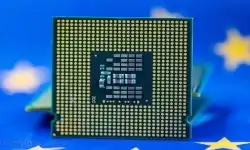
The invisible workhorse of technology: Inside the CPU
CPUs are at the heart of the devices we use every day – from desktop computers and laptops to smartphones and gaming consoles. But have you ever wondered how CPUs actually work?
Sponsored content by TME Transfer Multisort Elektronik
About products Selec brand installation meters and current transformers
Energy consumption in industrial plants is becoming an increasingly complex process due to many connected devices and continuous load fluctuations resulting from the nature of work. Most devices in industrial applications require high power to provide sufficient electrical energy to power large motors, heating systems, LED lighting, inverters, rectifiers, power supplies, and inductive circuits










Load more news