



Poland seeks to seize opportunities in Europe’s semiconductor sector
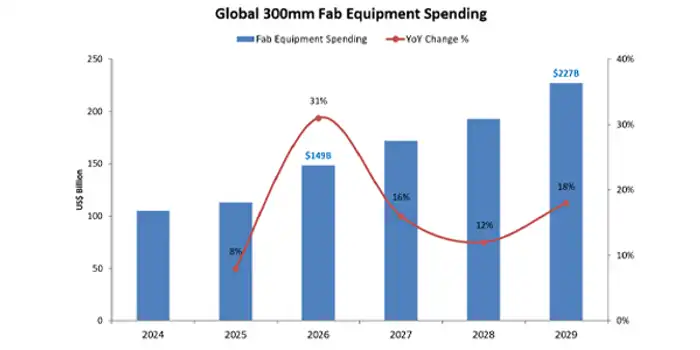
Poland’s semiconductor market could grow from USD 5.1 billion in 2025 to USD 23.7 billion by 2035. A report by Bank Gospodarstwa Krajowego (BGK), Poland’s state development bank, also identifies opportunities for the domestic sector not in building chip fabrication plants, but in developing integrated circuit design, power electronics, photonics, and semiconductor assembly and testing technologies. The outlook for an industry that is becoming increasingly important to European manufacturing will also be discussed at Evertiq Expo in Warsaw, scheduled for 22 October at PGE Narodowy Stadium.
Ad

Rising component costs could push notebook shipments lower in 2027
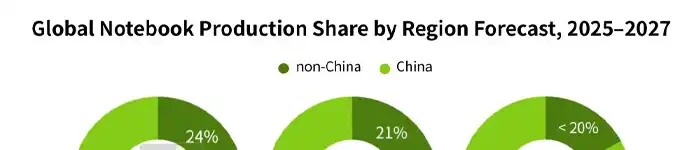
Next year, the biggest challenge for the notebook market is no longer getting hold of components but whether consumers are willing to pay for them, according to TrendForce. Global shipments are projected to decline, and the drop could be considerably steeper if brands pass on the full cost increase.

EMS under the hood: Capital efficiency and overall winners
EMS companies have been publishing mainly positive headlines related to growth and improving profitability. Even the most struggling companies, Lacroix and TT Electronics, are indicating a comeback after serious restructuring in the Americas region. This is very welcome news for the industry after all the recent crises impacting demand and supply chain.
Sponsored content by TME Transfer Multisort Elektronik

About products Selec brand installation meters and current transformers
Energy consumption in industrial plants is becoming an increasingly complex process due to many connected devices and continuous load fluctuations resulting from the nature of work. Most devices in industrial applications require high power to provide sufficient electrical energy to power large motors, heating systems, LED lighting, inverters, rectifiers, power supplies, and inductive circuits

Semiconductor supply chain on the edge?
The Q2-2026 semiconductor earnings rush is long gone, and even the laggards have now reported in their first Q3-2026 earnings calls. It is time to get a grip on what is going on in the semiconductor industry and its supply chain.
DRAM module revenue surged 59% in 2025 as AI crowds out mainstream supply
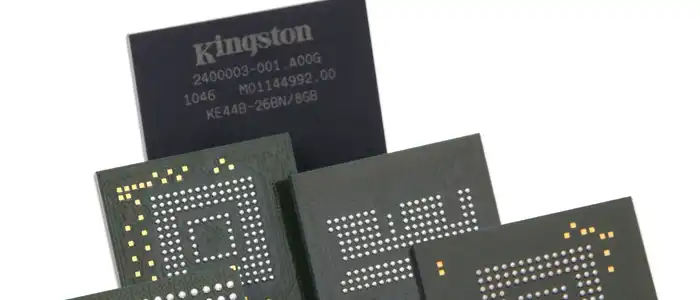
The global DRAM module market generated USD 21.2 billion in revenue in 2025, up 59% YoY, according to TrendForce — a sharp acceleration from the 7% growth recorded in 2024.
Ad


Ad

Swedish electronics manufacturing under the microscope – again
In May, Evertiq mapped Sweden's 20 largest EMS providers at Evertiq Expo Lund. The ranking was built on a database constructed from scratch — more than 750 companies were reviewed one by one, with 77 qualifying. The presentation landed well, but the conversations that followed were the most valuable part.
DRAM industry revenue surges 59.5% in Q2 as supply lags demand
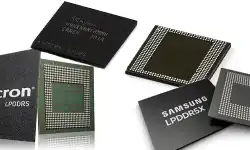
Total DRAM industry revenue rose 59.5% QoQ in Q2 2026, reaching nearly USD 154.73 billion, driven by sharp increases in contract prices and sustained AI server demand. Supply expansion continues to lag demand growth, with supplier inventories at historic lows, according to TrendForce.
Memory to account for 68% of cloud giant CapEx by 2027
DRAM and NAND Flash combined will account for 47% of major cloud service providers' total capital expenditure in 2026, rising to 68% in 2027, according to TrendForce. The shift reflects both soaring memory contract prices and surging procurement demand for AI infrastructure.
Top five NAND Flash brands post 77% revenue surge in Q2
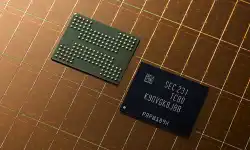
Combined revenue for the top five publicly listed NAND Flash brands rose 77% QoQ in Q2 2026 to USD 68.87 billion, driven by sustained AI server demand for enterprise SSDs and significant contract price increases. Micron posted the strongest growth of the group and moved up to third place, according to TrendForce.

Has the semiconductor market changed since spring?
Earlier this year, several discussions at Evertiq Expo pointed to the same conclusion: while the semiconductor industry continues to grow, that growth is far from evenly distributed. AI, memory and data centres have driven record revenues, while other parts of the electronics industry continue to face a very different reality.
Sponsored content by Evertiq AB

Evertiq is looking for a Sales Specialist in Poland
We are looking for a Sales Specialist who enjoys talking to people, building relationships and opening new doors. You don't need years of experience in B2B sales – what matters to us is that you are proactive, comfortable reaching out to new people and don't give up easily. You will work with companies across the electronics industry, helping them promote their business through advertising on Evertiq and participation in our industry events, while gradually building your own customer portfolio. We are looking for someone who wants to grow with us, learn the industry and actively contribute to Evertiq's development.











Load more news