
























Sponsored content by TME Transfer Multisort Elektronik
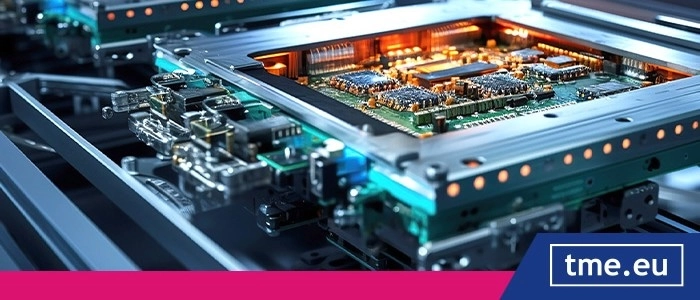
Raytac Bluetooth Low Energy modules in TME's offer
Contemporary communication has been dominated by wireless systems. Electronics increasingly rely on data exchange without the use of cables. This applies to household appliances, as well as industrial, medical automation, and Internet of Things solutions. One of the most commonly used short-range communication standards is Bluetooth, particularly its energy-efficient variant, Bluetooth Low Energy (BLE), which allows for the construction of compact battery-powered devices.
Sponsored content by Aurightec
What an EMS Laboratory Actually Finds When Electronics Fail
Most field failures that reach our laboratory are not exotic. They are the same handful of mechanisms, year after year. What varies is where they were introduced — and in the majority of cases we investigate, the durable fix turns out to be a design change rather than a process adjustment.
Sponsored content by Elemaster Group
In rail safety, the AI bottleneck isn't the algorithm: it's the evidence
Railway electronics are becoming more complex and software-defined, and suppliers are exploring where AI can help. But rail certification runs on determinism and verifiability, while AI is statistical by nature. At InnoTrans 2026, international group Elemaster argues the real gap isn't the algorithm, it's the testing infrastructure needed to prove AI actually works. And that is why owning the physical chain of verification is critical.
Load more news