



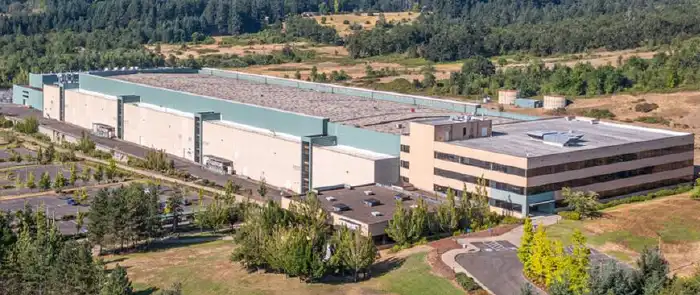
Former SK hynix 200mm fab in Oregon up for sale
A former 200mm memory fab in Eugene, Oregon, originally built by SK hynix, has been put up for sale. The site has about 170,000 square feet (15,800 square metres) of potential cleanroom production space, and much of the infrastructure is still in place.
Ad

Nokia to sell private wireless business to Aurelius
Nokia is selling Enterprise Campus Edge, its private wireless and industrial edge business, to investment firm Aurelius. The divestment is another step in Nokia’s strategy to concentrate its resources on fewer areas.

TTM to invest $400 million in AI PCB capacity in China and Malaysia
TTM Technologies is putting another USD 400 million into expanding production of advanced PCBs for AI data centres. Rather than building new plants, the company will expand four existing facilities in China and its plant in Penang.
Sponsored content by Evertiq AB

Evertiq is looking for a Sales Specialist in Poland
We are looking for a Sales Specialist who enjoys talking to people, building relationships and opening new doors. You don't need years of experience in B2B sales – what matters to us is that you are proactive, comfortable reaching out to new people and don't give up easily. You will work with companies across the electronics industry, helping them promote their business through advertising on Evertiq and participation in our industry events, while gradually building your own customer portfolio. We are looking for someone who wants to grow with us, learn the industry and actively contribute to Evertiq's development.

CSI Sud-Ouest reopens Toulouse PCB plant two years after arson attack
An arson attack in the summer of 2024 destroyed much of CSI Sud-Ouest’s PCB factory in Toulouse. Two years on, the Cimulec subsidiary has rebuilt and inaugurated the plant, and none of its 57 employees has been made redundant.

Memory boom: Micron's quarterly revenue nearly quintuples
Micron's revenue reached USD 54.2 billion in the fourth quarter of its 2026 fiscal year, almost five times the level of the same quarter last year. Rising memory prices pushed the gross margin to 87%, and the company expects supply to become even tighter in 2027 and 2028.
Ad

Ad

Broadcom and TOPPAN JV opens FC-BGA substrate plant in Singapore
Advanced Substrate Technologies (AST), a joint venture between TOPPAN and Broadcom, has opened Singapore's first facility for high-end FC-BGA substrates. The plant comes online as substrate capacity remains a bottleneck for AI and networking chips.
KIOXIA joins Applied Materials' EPIC Center as memory makers line up
Flash memory maker KIOXIA will join Applied Materials' EPIC Center in Silicon Valley as an innovation partner. It is the latest in a series of chipmakers to sign up.
LG Innotek targets $647 million profit from substrates by 2031
LG Innotek aims for its package solution business, which produces semiconductor substrates, to generate USD 647 million in operating profit by 2031. That is nearly eight times the level reached in 2025, as the company pushes into substrates for AI memory and CPUs.
Kitron breaks ground on new factory in Örnsköldsvik
Kitron has broken ground on its new production site in Gålnäs, Örnsköldsvik, Sweden. Construction is starting earlier than planned. In the spring, the company expected construction to begin in early 2027.
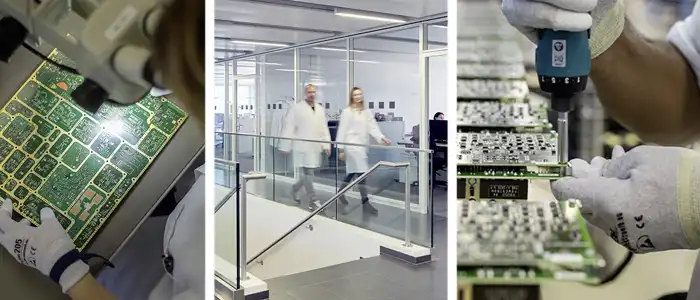
Variosystems expands coating and bonding capabilities in Steinach
Swiss EMS provider Variosystems is expanding its conformal coating, gluing and specialised manufacturing capabilities at its site in Steinach. The investments target customers in highly regulated industries such as Aerospace & Defence and Medtech & Life Science.
Sponsored content by TME Transfer Multisort Elektronik
About products Selec brand installation meters and current transformers
Energy consumption in industrial plants is becoming an increasingly complex process due to many connected devices and continuous load fluctuations resulting from the nature of work. Most devices in industrial applications require high power to provide sufficient electrical energy to power large motors, heating systems, LED lighting, inverters, rectifiers, power supplies, and inductive circuits














Load more news