
Why strategy has become the defining question for Europe's EMS industry
Some conference presentations end with the applause. Others begin there. They continue over coffee, in conversations between exhibition stands, and in the photographs people take before the final slide disappears from the screen. That was certainly the case during Evertiq Expo Berlin, where one presentation continued to resonate long after the audience had left the conference hall.
Visitors compared figures, photographed charts and debated the conclusions well into the afternoon. It wasn't simply that the numbers were new. They confirmed something many in the room had already sensed: European electronics manufacturing had entered a different chapter.
Looking back, Berlin felt less like the end of the spring Expo season than the point where many of its conversations finally came together. Across five Evertiq Expos in five different countries, discussions gradually shifted away from growth alone towards resilience, competitiveness and long-term positioning. As we reflected in our recent article, Five cities, five expos, one season – and then something new, the industry's conversations increasingly revolved around a single question: how should European manufacturers position themselves for a market that no longer behaves as it did only a few years ago?
The presentation in Berlin, delivered by Dieter G. Weiss, Mareike Haass and Eric Miscoll on behalf of in4ma and EMSNOW, offered perhaps the clearest illustration of that changing landscape. However, the figures shown on stage were only the beginning.
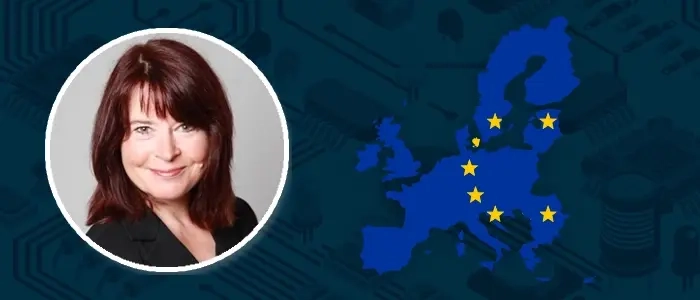
Ahead of the International in4ma EMS & PCB Forum in Würzburg on July 8–9, we spoke with Mareike Haass about the broader questions behind those charts. Why has strategy become such a dominant topic in the EMS industry? What role will Europe play in an increasingly competitive global market? And why are companies suddenly searching for better market data instead of simply waiting for demand to recover?
Her answers suggest that the industry is entering a new phase – one in which competitive advantage is defined less by manufacturing capacity alone than by the decisions companies make long before production even begins.
When growth stops being a strategy
For years, growth solved many of the EMS industry's strategic dilemmas. Expanding demand created room for different business models, different levels of efficiency and different approaches to manufacturing. Companies could grow alongside the market, even if they pursued very different strategies.
The environment many companies had grown used to is quietly disappearing.
Across Europe, conversations that once centred on expansion have shifted towards competitiveness, resilience and long-term positioning. Geopolitical uncertainty, changing supply chains, new technological demands and growing global competition have forced companies to ask more fundamental questions – not simply how to grow, but how to remain relevant in a market that no longer behaves as it did only a few years ago.
That changing mindset is reflected in this year's theme of the International in4ma EMS & PCB Forum: "Choosing the right strategy that creates your future." According to Haass, the title captures one of the defining challenges facing the industry today.
"Over the past few years, many EMS companies have realised that market growth alone is no longer sufficient to secure their future," she explains in conversation with Evertiq. "There is no longer a single strategy that works for everyone. That is precisely why choosing the right strategy for the individual company has become one of the most important management challenges in the EMS industry today."
What makes this particularly interesting is not simply that strategy has become more important. It is that strategy itself has become far more diverse.
Some companies are growing through acquisitions. Others are investing in specialisation, digitalisation or new geographic markets. None of these approaches is presented as a universal answer. Instead, they reflect an industry searching for different ways to solve the same problem: how to build resilience in a market where certainty has become increasingly rare.
AI isn't just changing technology
There was hardly a conference this spring where AI didn't appear sooner or later. Yet, according to Haass, what is changing is not the technology itself but the conversation around it.
Only a year or two ago, discussions focused primarily on how manufacturers could use AI to improve production, planning or engineering. Today, companies are increasingly asking a different question: what happens to the electronics industry when the rapid expansion of AI data centres and other compute-intensive AI applications creates massive additional demand for hardware, components and manufacturing capacity?
The unprecedented investment in AI infrastructure is already driving demand for semiconductors, networking equipment, PCBs and substrates. As capacity is redirected towards supporting this expansion, manufacturers are beginning to wonder whether familiar supply-chain bottlenecks could return – albeit in a very different form.
"Many companies are asking whether some of the supply-chain challenges experienced in recent years could reappear in a different form," Haass says.
It is a subtle but significant shift in perspective. AI is no longer discussed solely as a technology companies might adopt. It is increasingly viewed as a force capable of influencing production capacity, investment priorities and the availability of critical components across the entire electronics value chain.
Why market intelligence suddenly matters more than ever
One of the clearest signs that the industry is changing is not a breakthrough technology or a revolutionary manufacturing process. It is the growing demand for better market intelligence.
As companies reassess their manufacturing footprints, evaluate acquisition opportunities and rethink long-term investment strategies, understanding the structure of the global EMS market has become a competitive advantage in its own right. Questions that once seemed secondary – who is gaining market share, where production is expanding or which regions are attracting investment – are now finding their way into boardroom discussions.
According to Haass, this was one of the biggest surprises while preparing this year's in4ma Forum.
"Many companies are currently evaluating their strategic positioning, acquisition opportunities, manufacturing footprints and future growth areas. At the same time, the global EMS landscape continues to evolve rapidly. As a result, understanding who the key players are, where growth is taking place and how market shares are shifting has become increasingly important."
That growing demand for transparency also explains why in4ma introduced its first EMS & ODM Global 100 ranking this year.
"Twelve months ago, this topic was not even on our agenda. Today, we see tremendous interest in understanding global market structures and developments in order to make better-informed strategic decisions."
The ranking matters, of course, that is beyond dispute. But what matters even more is the question that made it necessary in the first place. Companies are no longer looking for data simply to understand what has happened. Increasingly, they need it to decide what should happen next.
Capacity still matters – but it is no longer enough
Throughout much of the EMS industry's development, manufacturing capacity was regarded as one of the clearest indicators of competitive strength. The ability to produce efficiently, deliver consistently and expand alongside customer demand formed the basis of long-term growth.
That foundation has not disappeared.
If anything, modern manufacturing capabilities remain a prerequisite for success. But according to Haass, they are no longer enough on their own to distinguish one company from another.
"Adequate and modern manufacturing capacity remains a fundamental requirement for success in the EMS industry. At the same time, we increasingly see that capacity alone is rarely a sustainable differentiator."
Instead, the definition of value is gradually expanding.
Customers increasingly expect manufacturing partners to contribute far beyond production itself. Engineering expertise, supply-chain competence, technological know-how and a deep understanding of specific industries have become integral parts of the relationship. At the same time, companies continue to invest in digitalisation, vertical integration and stronger regional footprints, recognising that proximity and flexibility are becoming strategic assets in their own right.
This helps explain why so many discussions across the industry now revolve around acquisitions, specialisation and new business models. These are not separate trends competing for attention. They are different answers to the same strategic question: how can an EMS company create value that extends beyond manufacturing capacity alone?
"The companies that are performing particularly well today are those that successfully combine both elements. They have the necessary manufacturing capabilities while also maintaining a clear strategic position in the market."
Manufacturing remains the foundation but strategy increasingly determines what companies are able to build upon it.
The decisions that will shape the next chapter
When asked what she hopes participants will take away from this year's in4ma Forum, Haass does not point to a particular technology, market segment or business model.
Instead, she returns to the idea that quietly runs through the entire conversation.
Strategy is no longer something companies revisit every few years. It has become a continuous process of adaptation.
"European electronics manufacturing continues to offer significant opportunities and strengths. However, these opportunities will not materialise automatically."
It is a measured assessment rather than an alarmist one. Europe retains world-class engineering, strong industrial know-how and highly specialised manufacturers. Yet these strengths alone will not determine future success. Increasingly, companies will be judged by how effectively they recognise changing market conditions, and how early they respond to them.
"The companies that understand their strengths, clearly define their market position and make the right strategic decisions early will continue to succeed. Those who simply hope that market conditions will return to the way they were in the past may face a much more challenging future."
In many ways, that observation captures the broader mood that has emerged throughout this year's conference season. Conversations that once focused on waiting for markets to recover are increasingly centred on preparing for what comes next.
A conversation that continues
Back in Berlin, visitors remained in front of the final slides long after the presentation had ended. Some photographed the data. Others continued debating the conclusions in the corridors outside the conference hall.
The conversations that began in Berlin are about to resume.
In just a few days, many of the same questions will return in Würzburg, where industry leaders, analysts and manufacturers will once again meet to discuss the future of European electronics manufacturing. Not through the lens of short-term market fluctuations, but through the strategic choices that will shape the years ahead.
As Haass puts it:
"The future of the European electronics industry will be shaped less by external circumstances and more by the strategic decisions companies make today."
If the spring Evertiq Expo season revealed the questions occupying the industry, the discussions in Würzburg may offer the first clues to how companies intend to answer them.