



Heart of the electronics industry beats again in Kraków
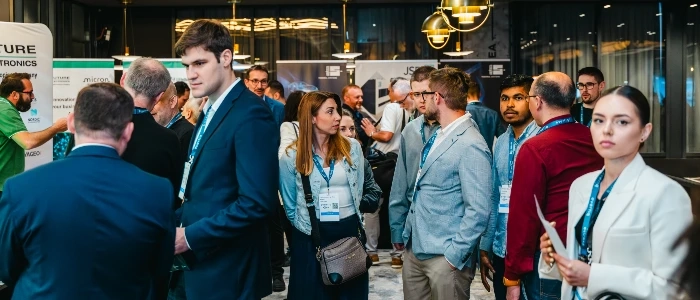
Evertiq Expo Kraków 2026 brought the electronics industry back to Kraków on May 7. The industrial atmosphere of CFK13, with its distinctive 1930s character, set the stage for discussions about where the Polish and European electronics industries are heading next.
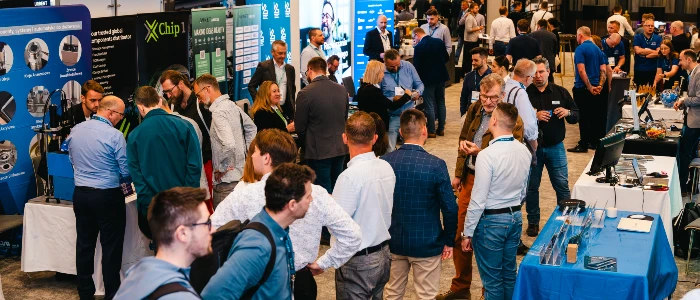
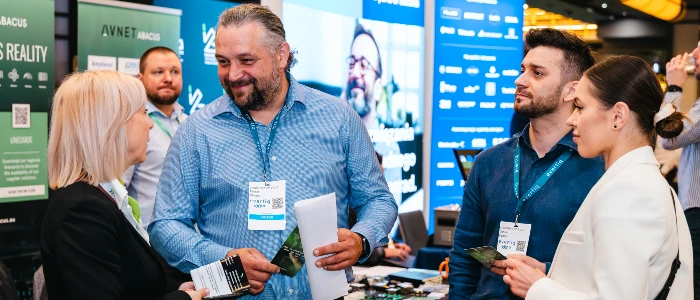
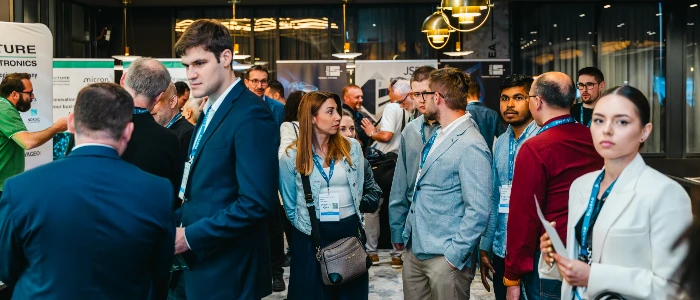
This year’s edition of Evertiq Expo Kraków saw strong engagement from across the electronics industry. The venue was filled with 456 participants and 53 exhibiting companies altogether. Among the 291 registered visitors, organisers noted a significant number of new attendees representing companies that had never previously taken part in an Evertiq expo, underscoring the event’s growing reach within the sector. The final attendance figures are likely somewhat higher, as not all visitors collected their badges. Full statistics are available here.
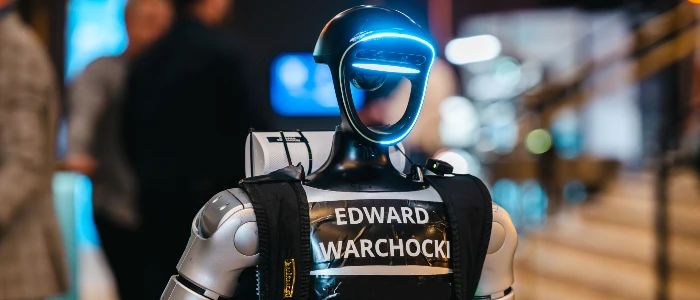
Evertiq Expo Kraków also welcomed an unusual guest – Edward Warchocki, an AI-powered robot who engaged visitors in conversations about artificial intelligence and humanoid robotics, demonstrating what these interactions look like in practice while exchanging greetings with attendees throughout the day.
Alongside the exhibition floor and business meetings, the conference programme became one of the most discussed parts of the event.
Evertiq Expo Kraków 2026 opened with a panel discussion moderated by Ewelina Bednarz (Evertiq), featuring Maciej Sobolewski (Fideltronik) and Jacek Małecki (Best Supply). The discussion focused on electronics designed for demanding environments, with particular attention paid to supply chains, engineering decisions made during the design stage, and how those decisions later affect the performance of the entire system.
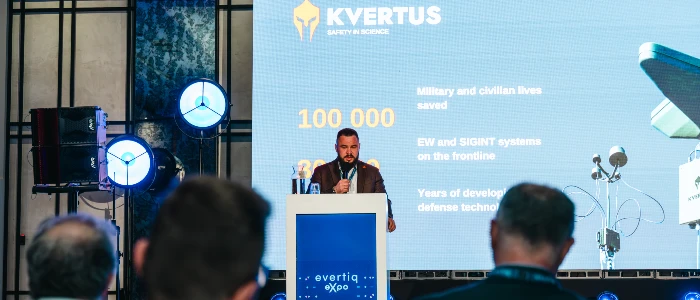
The stage was then taken over by Yaroslav Filimonov, CEO of Kvertus, whose systems are currently used to protect eight of Ukraine’s largest cities against UAV threats. His presentation left the audience in silence as he spoke about the need to protect critical infrastructure in Poland from drones, while also explaining how such systems operate under real battlefield conditions.
The programme continued with Piotr Owczarek, CEO of the Polish company AiRob, who discussed the challenges behind automating high-mix, low-volume manufacturing. Drawing from practical experience, he presented a number of real-world examples illustrating both the advantages of automation and the importance of implementing such systems correctly.
Dominik Kowalczyk (DACPOL) addressed the topic of signal integrity and electromagnetic compatibility, discussing how electromagnetic interference affects electronic systems, particularly in defence-related applications, and outlining some of the most common causes of signal integrity loss. The presentation included practical examples showing how such issues appear in real production and operating environments, sparking numerous follow-up discussions later during the event.
One of the most attended presentations of the day came from Jacek Małecki (Best Supply), who spoke about the current electronic components market and the risks of future supply disruptions. Based on many years of experience across distribution, EMS and OEM operations, he outlined possible market scenarios and discussed how companies can prepare for continued volatility.
The Polish expert then handed the microphone to a Danish analyst presenting his market analysis in Poland for the first time. Claus Aasholm (Semiconductor Business Intelligence) provided a global overview of the semiconductor industry based on data related to investments, manufacturing capacity, supply chain shifts and actual resource utilisation. Rather than focusing on dominant industry narratives, his presentation concentrated on the indicators that are genuinely shaping the semiconductor sector.
Cybersecurity was another key topic during the conference. Dawid Goljat (EXEA Data Center) discussed changes relevant to manufacturing companies in connection with the uKSC and NIS2 regulations. As he explained, the focus is gradually shifting away from compliance itself and towards an organisation’s ability to maintain operational continuity during an incident. His presentation focused on practical approaches to building operational resilience and selecting appropriate competency models.
Karol Sowa (Sowa Electronics) presented automated optical inspection (AOI) solutions for THT assembly. He discussed both 2D and 3D technologies, including the possibility of simultaneous inspection on both sides of printed circuit boards before and after soldering processes, highlighting their role in improving manufacturing quality control.
The conference concluded with a presentation by Ewelina Bednarz (Evertiq) focused on the Top 20 European defence companies, examining ongoing shifts in the structure of the market and their growing significance for the electronics industry. The discussion about Europe’s defence sector in numbers left the audience with one open question: will next year’s ranking be just as interesting?
Evertiq Expo Kraków will return to Kraków on June 9 next year, and registration for the event has already opened.