


AI demand squeezes consumer MLCCs – opening doors for Chinese suppliers
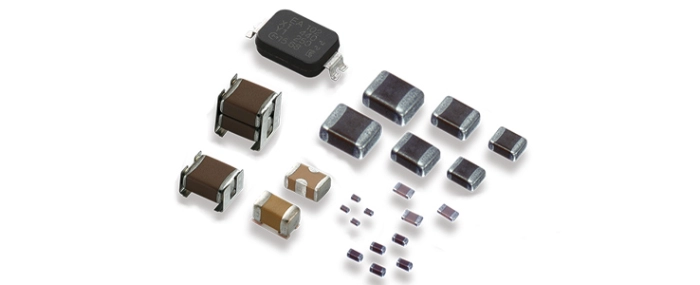
Japanese and Korean MLCC makers are cutting supply to the consumer market to prioritise capacity for AI applications. The shift is opening doors for Chinese suppliers, several of which are now undergoing qualification with global brands such as Dell, HP, ASUS and Acer, according to market research firm TrendForce.
The MLCC industry is undergoing a structural shift as AI demand continues to displace traditional markets, according to a press release from TrendForce. The clearest example is Murata, which announced on September 10 that it will discontinue certain products, including general-purpose GRM types for consumer use and some automotive-grade components. These products typically carry gross margins below 5%. Murata instead plans to focus on advanced, miniaturised, high-capacitance components for AI servers, data centres and automotive electronics.
Murata will accept orders until 2028, with final shipments in 2029. According to TrendForce, the three-year transition is intended to avoid supply shortages like those seen in 2018, and reflects a long-term move by Japanese and Korean manufacturers to tighten supply of consumer and lower-tier automotive MLCCs.
The resulting shortages and cost pressures have unexpectedly created an opening for Chinese suppliers that have long struggled to enter the supply chains of global brands. Dell, HP, ASUS and Acer have reportedly already completed qualification of Chinese memory suppliers. Through introductions by ODMs like Huaqin, LCFC and Luxshare, the brands have now also begun qualifying MLCCs from Chinese suppliers Viiyong and Chaozhou Three-Circle. Quanta and Pegatron have likewise visited Chaozhou Three-Circle and initiated qualification procedures.
In the near term, TrendForce does not expect Chinese suppliers to challenge Japanese and Korean dominance in AI server-grade products, as they remain constrained by high-end yields and production capacity. However, as supply of mid- to high-capacitance consumer-grade products tightens, more orders are expected to spill over to Chinese manufacturers, and their role as alternative sources is set to expand in general-purpose servers, consumer electronics and lower-end automotive applications.