

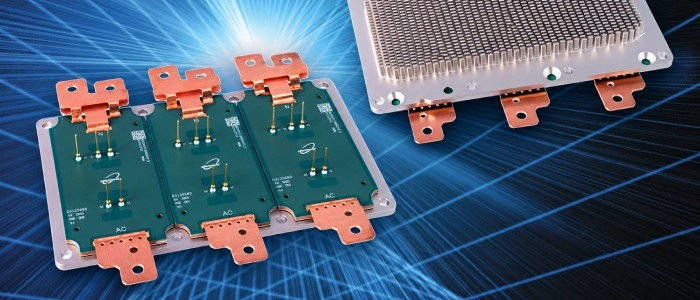
StarPower and the New Discipline of Power Electronics
The company’s trajectory reflects a broader industry pattern: sustained sales growth paired with rising investment intensity. Increased R&D spending, continuous portfolio expansion, and ongoing capacity build-up signal a deliberate long-term strategy. Rather than optimizing for short-term margins, the focus is on accelerating innovation cycles and strengthening technological depth—especially in next-generation IGBT and SiC solutions.
What distinguishes this approach is its pace. The market is witnessing what can best be described as a “Chinese speed” of innovation: rapid iteration, fast time-to-market, and a willingness to translate emerging technologies into deployable products with remarkable agility. StarPower embodies this mindset. Development cycles are compressed, customer feedback loops are tighter, and new generations of devices and packages are introduced with increasing frequency. This speed is not only a competitive advantage — it is becoming a structural requirement in a market where application demands evolve faster than ever.
At the same time, global trends reinforce this direction. Electrification continues to expand across electric mobility, renewable energy, industrial automation, and digital infrastructure. Wide-bandgap technologies such as SiC are moving steadily into the mainstream, while established IGBT platforms remain essential where cost efficiency and proven robustness dominate. The result is not a replacement dynamic, but a coexistence—one that requires careful system-level optimization.
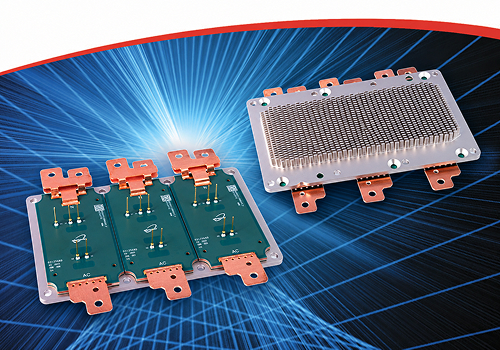
StarPower’s strength lies in navigating this balance. Its portfolio combines evolving IGBT platforms with expanding SiC capabilities, supported by strong emphasis on packaging technologies, thermal management, and qualification processes. These are no longer secondary considerations; they define whether a device’s theoretical advantages translate into real-world performance.
Equally important is the recognition that supply capability has become part of engineering itself. Capacity expansion and manufacturing readiness are now inseparable from design decisions. Customers expect not only performance, but also availability, consistency, and scalability. StarPower’s investments reflect this shift toward integrated capability.
The conclusion is clear. The future of power electronics will be shaped by those who can combine speed with substance—fast innovation with rigorous engineering, rapid deployment with reliable qualification. In this environment, success is not defined by the best chip alone, but by the ability to deliver complete, validated, and manufacturable solutions.
StarPower is aligning itself with exactly this reality: a world where power electronics is no longer just about devices, but about delivering performance at system level—quickly, reliably, and at scale.
Meet StarPower at electronica 2026
Engineers and system designers are invited to explore StarPower’s latest power semiconductor technologies at electronica 2026 in Munich.
Hall B4, Booth 500 together with Elektronik Praxis.
Driven by Quality
Power electronics systems operate under extreme conditions—high currents, elevated temperatures, and demanding switching environments. Reliability is therefore a key design parameter.
StarPower places strong emphasis on quality assurance and rigorous validation. All products comply with international standards such as IEC 60747-9 and JEDEC and undergo extensive qualification testing.
About StarPower
StarPower Semiconductor Ltd. is a leading global manufacturer of power semiconductor modules headquartered in Jiaxing, China, approximately 95 km south‑east of Shanghai. Founded in 2005, the company develops and manufactures IGBT modules, SiC MOSFET devices, IPM modules, FRD and rectifier modules as well as customer‑specific power module solutions. These components are used in a wide variety of applications such as industrial drives, renewable energy systems, inverters, welding equipment, UPS systems and electric vehicles. Power ranges extend from 0.5 kW to more than 1 MW.
Learn more about: