
Speed is the new edge
Quality and on-time delivery used to be enough. In today's EMS market, the decisive advantage is controlled speed.
By Bo Lybaek, GPV Group A/S, with collaboration from Philip Stoten
For as long as I have been in this industry, we have talked about service excellence in terms of quality, on-time delivery and fast response. Get that right, consistently, and you earn the right to compete. They were the foundation, and they still are. What has changed in recent years is the importance of speed as a competitive advantage.
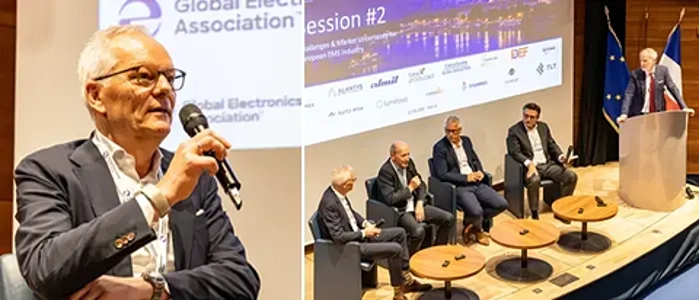
I said as much on the market panel at the Global Electronics Association's summit in Paris, and I want to make the case more fully here, because I think speed is widely misunderstood. When people hear it, they imagine rushing, cutting corners, running with your head down. That is not what I mean at all. The speed that matters is controlled speed. Fast and precise. Fast and professional. Fast and transparent. Our customers are highly professional people, and they expect us to be highly professional in return. Speed without that discipline is not an advantage, it is an accident waiting to happen.
Why does speed matter so much now? Because markets continue to move. Demand changes, technologies evolve, supply conditions shift, and new opportunities emerge. That is not something we can control, and we should not expect markets to stand still. Instead, what we can control is how quickly and professionally we respond.
That requires experience, agility and the capabilities to adapt as conditions change. When demand jumps in a segment, the company that can respond in weeks rather than quarters captures it. When it falls away, the company that can adjust quickly protects itself. Speed is how you win on the way up without losing on the way down.
There is also a competitive reality we cannot ignore. I see a great many opportunities for Europe, genuinely. But I also watch our Chinese competitors, and what strikes me most is not their cost or their scale. It is how fast and committed they do things. If we tell ourselves, it is fine that they are quicker, that we will compete on other merits, we are fooling ourselves.
We have to make sure the entire company is fast, not just one department, not just the factory floor, but the whole organisation, from the first customer conversation to the finished product delivery. If we do not, we will steadily lose ground to people who have made speed a habit.
That word, entire, is the hard part. It is relatively easy to make one process quick. It is very difficult to make a whole company fast without it becoming chaotic. This is where the control comes in. Speed requires clear processes, well-defined responsibilities and efficient decision-making, built on experience, established standards and a common understanding of how we work.
Speed has to be built on the same foundation of quality and on-time delivery, not instead of it. A fast company that ships late or ships defects is just failing more quickly. The art is to be quick and reliable at the same time, and that takes investment, in systems, in tools, in the way you work with customers, and in the discipline to base decisions on facts and analysis rather than noise.
It also changes how you handle the thing everyone is worried about right now, the supply chain. A fast, well-run company does not simply react to shortages, it anticipates them, because it has the visibility and the close customer dialogue to see them coming and being proactive.
At GPV, we have put real effort into tools that let us verify the quality of a forecast and have a genuine, fact-based conversation with a customer about what they actually need, rather than what they have hopefully written down. That is speed too, the speed of knowing sooner, deciding sooner, acting sooner. In a constrained market, the company that understands reality first has an enormous advantage over the one still arguing about it.
I came away from Paris optimistic about European electronics, and I meant it. The demand is real, the order books are the strongest I have seen in years, and there are opportunities here for those willing to take them. But optimism cannot be a strategy. The companies that will convert this moment into durable success are not necessarily the biggest or the cheapest. They are the fast ones, the ones that can move decisively when the market shifts and do it without dropping the quality and reliability that got them to the table in the first place.
Quality, on-time delivery and fast response earn you the right to play. Speed, controlled, professional, company-wide speed, is how you win. In a market that refuses to sit still, it is the edge that matters most.
Editor's update: Following the publication of this article, Bo Lybaek and Philip Stoten met again at electronica 2026 in Munich for a video interview. Watch their conversation below: