




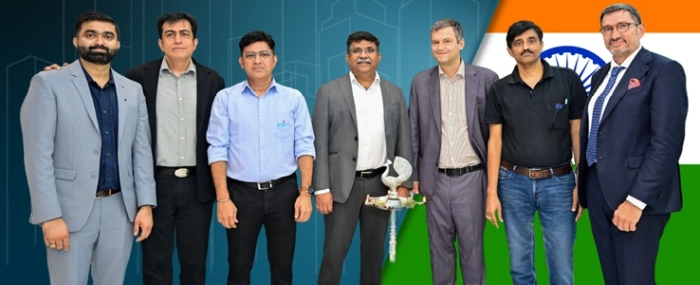
Melexis expands in India with new office, strategic growth plan
The move further strengthens Melexis’ local presence in one of its fastest-developing markets and will support growth opportunities in two-wheeler mobility, vehicle electrification, solar market and smart energy metering.
Melexis has announced the opening of its new office in Pune, India. The move further strengthens Melexis’ local presence in one of its fastest-developing markets and will support growth opportunities in two-wheeler mobility, vehicle electrification, solar market and smart energy metering, the company said.
Melexis has been serving customers in India for over 15 years, mainly through distribution partners. Since then Melexis has enjoyed strong growth, with sales growing by more than 30% per annum over the last decade. The new office marks the next stage of this development, moving from a distribution-led presence to a dedicated local operation designed to bring Melexis closer to customers and application requirements in India.
This momentum is closely aligned with local market dynamics, as India represents one of the world’s largest volume opportunities for mobility electronics, particularly in two-wheelers.
With the average cost of an Indian two-wheeler sitting just above EUR 1,000, system cost remains critical, and Melexis’ sensors and motor drivers are designed to help manufacturers improve performance and integration while supporting the economics of high-volume mobility applications, the company said.
Melexis is also addressing India’s solar market and smart infrastructure market. A major shift is emerging in smart energy metering, with India planning to replace traditional energy meters with approximately 250 million smart meters. Melexis is directly targeting this segment with its 3D magnetic sensor designed to support magnetic anti-tampering in smart energy meters.
“Entering the market at this stage gives us a distinct competitive advantage,” said Varun Deshmukh, Sales Director at Melexis India. “Melexis has engineered solutions based on the actual, current requirements of Indian customers, featuring advanced capabilities that older legacy products lack. We are aiming for a 30% to 40% market share in key segments like energy meters.”