

TUSK IC raises €15M to move its satellite chips into mass production
In combination with mainstream CMOS semiconductor technology, the TUSK IC solution brings scalable, affordable connectivity to the next generation of LEO and MEO (Low & Medium Earth Orbit) satellite constellations.
TUSK IC, a Belgian-based spin-out of KU Leuven and developer of CMOS ICs for the automotive, industrial and SatCom segments, has announced the successful closing of its EUR 15 million Series A funding round.
This funding accelerates the commercialization of the Standard CMOS-based Beamformer ICs for Ka-band SatCom. TUSK’s Beamformers are a key building block of Flat Panel Antennas (FPAs) and enable a lower-cost, lower-power alternative to the SiGe and Specialty CMOS technologies used in SatCom user terminals today, the company said.
In combination with mainstream CMOS semiconductor technology, the TUSK IC solution brings scalable, affordable connectivity to the next generation of LEO and MEO (Low & Medium Earth Orbit) satellite constellations.
The investment round was led by Matterwave Ventures, FORWARD.one, and Flanders Future Tech Fund, managed by PMV, with participation from the Schaubroeck family and continued support from the current investors, the company said.
“TUSK IC combines leading-edge mmWave innovation with the economics and scalability of standard CMOS, addressing a critical bottleneck in satellite communications,” said Silviu Apostu, Partner at Matterwave Ventures. “We believe this positions the company to underpin a more diverse and resilient space-based communications infrastructure.”
“By bringing the economic and manufacturing advantages of CMOS to satellite communications, TUSK IC is democratizing high-performance connectivity from space,” said Arjan Göbel, General Partner at FORWARD.one.
TUSK IC is working with a leading satcom manufacturer to integrate its technology into the development of a new Electronically Steered Array antenna.
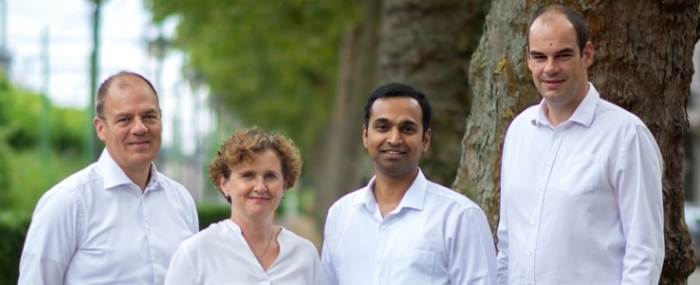
“This investment is a strong endorsement of both our technology and our team,” said Kathleen Philips, CEO of TUSK IC. “The investment will accelerate the transition from prototype chips to high-volume production.”