

Nexstrom raises $12M to commercialize wafer-scale 2D chip platform
The funding will support ongoing platform development, collaborations with semiconductor foundries and expansion of Nexstrom’s engineering and leadership teams as the company advances high-performance, low-power chips for AI, data centers and computing applications.
Singapore-based semiconductor startup Nexstrom has announced it has raised a USD 12 million seed round led by Xora Innovation, with participation from Foothill Ventures and SEEDS. The round brings Nexstrom’s total capital raised to USD 15 million, including USD 3 million in non-dilutive funds, the company said.
The funding will accelerate commercialization of Nexstrom's wafer-scale 2D semiconductor platform, driving toward 12-inch 2D wafer growth on production-ready manufacturing tools. The Singapore-based company is also working with industry partners to validate its technology within existing chip manufacturing workflows.
“Silicon has fueled decades of computing innovation, but the industry now needs a new materials platform to continue scaling performance,” said Dr. Lance Li, Co-Founder and Chief Scientist, Nexstrom. “For years, the challenge has not been demonstrating the promise of 2D materials, but manufacturing them at the scale and quality advanced foundries require.”
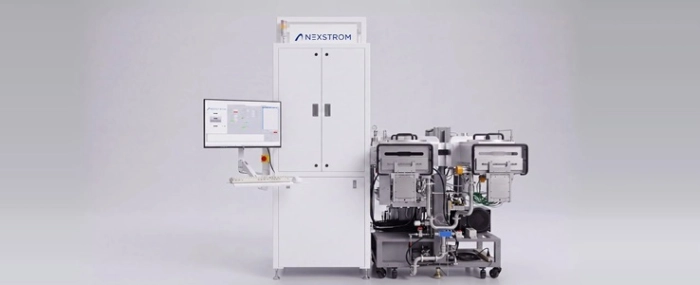
Unlike existing methods that yield only small laboratory samples or require changes to existing foundry manufacturing processes, Nexstrom’s full-stack platform integrates proprietary chemical vapor deposition (CVD) hardware, process technology, and wafer-scale 2D material growth right into a foundry’s existing workflow.
“The industry needs high-quality, uniform 2D materials on 300 mm substrates, and solving that materials bottleneck is exactly where Nexstrom is focused,” said Dr. Philip Wong, Board Advisor at Nexstrom and Inez Kerr Bell Professor at Stanford University.
The new funding will support ongoing platform development, strategic collaborations with semiconductor foundries, and the expansion of Nexstrom’s engineering and leadership teams as the company advances high-performance, low-power chips for AI, data centers, and future computing applications, the company said.