



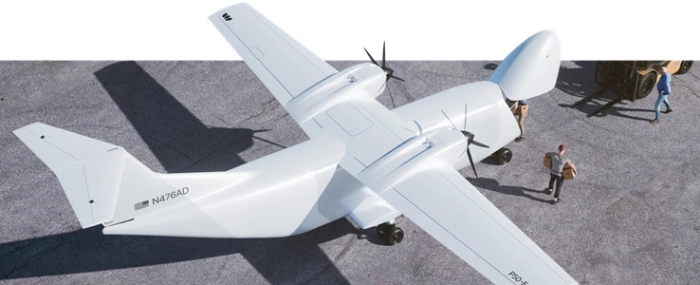
Poseidon raises $60 million to build unmanned cargo aircraft
The funds will be used to bring Poseidon’s initial full-scale aircraft through its flight-test campaign, establish and scale the company’s first production line, expand its engineering and operations teams, and continue delivering to commercial logistics and defense customers.
Poseidon Aerospace, a California-based startup focused on developing and operating unmanned cargo aircraft, has announced the close of an oversubscribed USD 60 million Series A financing. The round was led by TQ Ventures, with participation from JAWS, G Squared, Hanwha Asset Management USA, Starship Ventures, Drover Ventures, Draper Associates, and other investors, Poseidon said in a press release.
Poseidon is initially focused on two markets: regional commercial air cargo and contested logistics for defense. By applying the same aircraft platform and operating model across both markets, Poseidon intends to make commercial freight more efficient while strengthening the resilience and flexibility of defense supply chains.
The new capital will be used to bring Poseidon’s initial full-scale aircraft through its flight-test campaign, establish and scale the company’s first production line, expand its engineering and operations teams, and continue delivering against customer programs across commercial logistics and defense, the company said.
“Most aircraft are designed first around the people flying them and then adapted to carry cargo,” said David Zagaynov, Co-Founder and CEO of Poseidon. “We are starting with a different question: How would you design an aircraft if its only purpose were to move payload as efficiently and reliably as possible? We are building unmanned cargo planes from the ground up, designed and purpose-built for logistics with every modern innovation.”
“Air cargo is one of the world’s most important pieces of infrastructure, yet the aircraft and operating models behind it have changed remarkably little,” said Schuster Tanger, Co-Founder and Partner at TQ Ventures. “David, Parker and the Poseidon team are taking a disciplined, first-principles approach: use proven technologies where they work, redesign the aircraft around payload and build an operating model that can deliver lower costs and higher utilization.”