For Europe's electronics manufacturers, sustainability has become far more than a long-term ambition. Customer questionnaires, ESG platforms and an expanding regulatory framework are rapidly becoming part of everyday business, requiring companies not only to improve their environmental performance but also to demonstrate it through an increasing number of reporting frameworks.
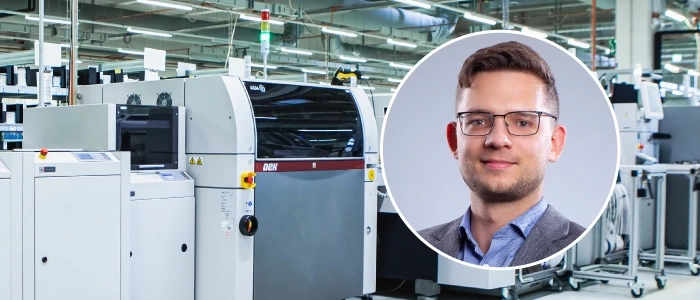
Against this backdrop, Germany-based EMS provider DBK EMS GmbH & Co. KG recently completed its first EcoVadis assessment, achieving a score of 70 out of 100 and placing the company among the top 20% of organisations evaluated by the platform. But for Pascal Lefarth, Corporate Sustainability and Energy Manager at DBK, the assessment represents something much broader than a sustainability rating.
"We are proud of the result, especially as this was our first EcoVadis assessment. However, the score itself is only one aspect. More importantly, it confirmed that many of the changes we have established over recent years are aligned with internationally recognised sustainability standards” – he says to Evertiq.
The decision to participate was not part of a branding exercise. In fact, DBK had deliberately stayed away from EcoVadis for several years, despite already responding to numerous customer questionnaires and sustainability platforms.
"Over the past few years, we have seen a rapid increase in sustainability questionnaires, customer-specific platforms and ESG assessment tools. As a supplier, it sometimes feels as we are drowning in different requests for largely similar information” – he explains. „We initially decided against EcoVadis, primarily because of the associated costs and the additional workload involved."
That position changed as customer expectations evolved. More customers began requesting EcoVadis ratings, while one strategically important customer made participation a clear expectation. By then, however, DBK also felt that its sustainability management had reached a level where an external assessment would accurately reflect years of work carried out across the organisation.
Rather than treating EcoVadis as another customer requirement, DBK used the assessment to strengthen sustainability management across the entire group.
Although completing the EcoVadis assessment took several days, preparing for it had been a much longer process. Over the previous 15 months, DBK had developed the policies, processes and documentation required for the assessment, while many of the company's sustainability initiatives had already been part of its operations for years, long before they were formalised within an ESG framework.
For Lefarth, EcoVadis marked an important new step – one that provided an opportunity to evaluate how the company's sustainability management had matured over time.
"Internally and personally, the result is particularly rewarding because it reflects fiifteen months of intensive work building a structured ESG management system. While sustainability has always been part of our company's mindset and many responsible decisions were already being made, the specific policies, KPIs and documentation processes required by an assessment such as EcoVadis were not available. Establishing these required a significant effort and close collaboration across ten entities globally."
Rather than assessing individual sites separately, DBK completed EcoVadis at group level, creating a common framework for ESG policies and reporting across the organisation.
"One of our objectives was to create a solid foundation that would satisfy the growing number of customer ESG requests through a recognised framework. Combined with our Sustainability Report, we hoped that EcoVadis would provide a central and credible source of sustainability information for customers and other stakeholders."
The assessment has helped reduce the number of individual customer requests, but Lefarth believes the ESG reporting landscape remains unnecessarily fragmented. Rather than converging around one or two widely accepted standards, companies are still expected to respond to multiple platforms and assessment systems.
"EcoVadis has certainly reduced the number of individual customer assessments we receive. However, I had hoped the market would gradually converge around one or two widely accepted platforms. Instead, companies are still expected to participate in several different systems, including major frameworks such as CDP, so the journey is far from over."
The coexistence of multiple platforms also has financial implications. While suppliers typically pay for EcoVadis assessments, other platforms, such as CDP or IntegrityNext, are often funded by the requesting customer, reducing the incentive to consolidate around a single reporting framework.
"The challenge is finding time to implement them"
Despite the progress DBK has made in formalising its ESG management, Lefarth believes today's biggest challenge is no longer identifying worthwhile sustainability initiatives. It is finding enough time to put them into practice.
"I actually maintain a long list — around 100 ideas — of potential energy-saving measures, sustainability projects and improvement opportunities that could further reduce our environmental footprint. The challenge is often not identifying worthwhile projects, but finding the time and resources to implement tchem.”
Many of these initiatives do not generate an immediate financial return, making it more difficult to justify additional investment in dedicated sustainability staff. At the same time, the specialised expertise required to manage ESG has become increasingly costly, leaving companies to balance long-term sustainability ambitions with day-to-day business priorities.
„To be completely honest, sustainability management today is influenced heavily by an ever-growing number of regulatory requirements. A considerable amount of time is spent monitoring new legislation, collecting data, responding to customer requests and building the documentation and reporting structures that are increasingly expected from companies."
According to Lefarth, one example is the EU Packaging and Packaging Waste Regulation (PPWR), which requires extensive supplier communication, data management and compliance work — activities that inevitably compete with practical sustainability projects.
Every new regulation creates additional work for companies. Very often these new requirements end up with the people who already understand compliance systems and ESG reporting, even if the topic itself is outside their core area of responsibility. Companies simply cannot hire a new specialist every time another regulation comes into force. These activities are necessary, but they naturally leave less time for hands-on sustainability projects that deliver immediate environmental benefits."
Lefarth believes this is becoming an increasing challenge, particularly for small and medium-sized enterprises that often lack dedicated sustainability teams.
"I genuinely support the ambitions behind European sustainability legislation. The goals are absolutely the right ones. However, I would like to see regulations designed more proportionately, recognising that the needs and resources of SMEs differ significantly from those of large corporations. Larger companies could reasonably be expected to meet more extensive reporting requirements, while smaller businesses should be able to devote more of their resources to implementing practical sustainability projects rather than managing an ever-growing administrative burden."
Sustainability and competitiveness are becoming increasingly connected
Europe's EMS industry is currently operating in one of its most challenging market environments in recent years. Like many manufacturers, DBK has postponed larger investments, including renewable energy projects and battery storage systems, as financial resources have become more constrained.
Even so, Lefarth argues that sustainability should be viewed not as an additional cost, but as part of the solution.
"Many sustainability measures — such as energy efficiency improvements, waste reduction, process optimisation and supply chain transparency — also contribute directly to cost control, risk management and operational resilience. In this sense, sustainability and economic performance are not opposing objectives; they increasingly support one another."
While some investments have inevitably been delayed, the company's long-term direction has not changed.
"One positive signal for me is that our shareholders remain committed to the path we have chosen. Even as parts of the EU sustainability agenda are being revised, postponed or simplified, there is a clear understanding within DBK that sustainability remains an important long-term topic.
For us, sustainability is therefore not just about compliance. It is about ensuring that DBK remains a resilient, future-oriented and responsible company for customers, employees and future generations."
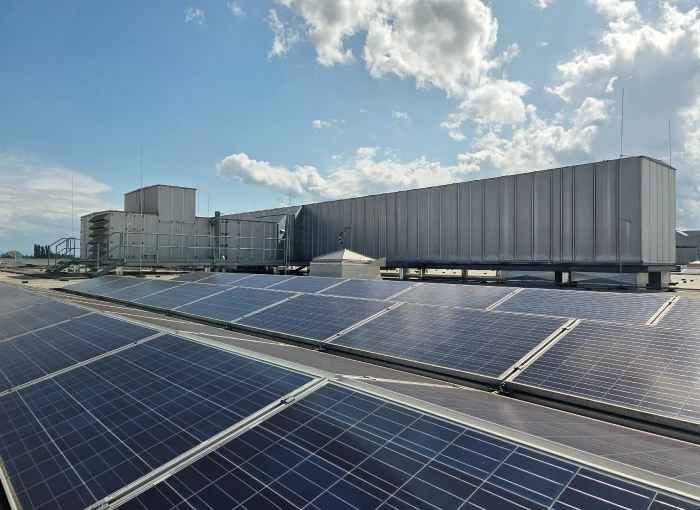
DBK's long-term approach is reflected in a number of investments made well before sustainability reporting became a standard business requirement. When the company's headquarters was completed in 2012, it already incorporated geothermal energy and photovoltaic systems. In 2022–2023, DBK introduced on-site green nitrogen production, eliminating the need for daily truck deliveries, while also installing electric vehicle charging stations. More recently, the company has increased its share of renewable electricity and improved the efficiency of its 452 kW photovoltaic installation by up to 20%.
Finding the right balance
Asked what advice he would give other EMS companies, Lefarth's answer is straightforward.
"If there is one lesson we have learned, it is this: start early, but stay pragmatic. Looking back, I am glad that we started preparing before these requirements became unavoidable. Building an ESG management system takes time, and many of the necessary processes, policies and data structures cannot be created overnight. Companies that wait until sustainability requirements become mandatory often find themselves under significant pressure."
At the same time, he believes companies need a regulatory environment that rewards long-term commitment rather than encouraging businesses to postpone action.
"One of my biggest concerns is that constantly changing regulations create the impression that waiting is the safest strategy. Companies that invest early are not always rewarded, because requirements are later postponed, revised or simplified. That can be discouraging for organisations that genuinely want to move ahead, and I don't think that is the message Europe should be sending.
Nevertheless, I still believe that taking sustainability seriously is the right approach. The key is finding the balance between long-term preparation and practical implementation. Build the necessary structures, but never lose sight of the actual objective: reducing environmental impacts, improving products and processes, and creating a resilient business. Sustainability delivers the greatest value when it moves beyond reports and compliance and becomes part of everyday decision-making."
That broader perspective also shapes Lefarth's view of the future competitiveness of Europe's EMS industry.
While he acknowledges concerns about Europe's competitive position, he rejects the idea that ambitious sustainability policies should be abandoned simply because other regions have historically emitted more.
"I don't agree with the argument that sustainability efforts in Europe are pointless because larger polluters such as China or India will not change. They are changing. They may have started later, but once they decide on a direction, they move very quickly. In ten or fifteen years, China could become one of the global leaders in sustainability."
For Lefarth, Europe's challenge is therefore not to lower its environmental ambitions, but to provide companies with a stable and predictable framework that enables long-term investment and innovation.
"Europe's strength should lie in setting ambitious goals and then consistently following through. Companies need a stable direction that gives them the confidence to invest for the long term, rather than adapting to constantly changing requirements. If we achieve that balance, sustainability can become not only a regulatory obligation, but also a genuine source of long-term strength for European industry."