



Electronic components market: A crisis gathering momentum
Artificial intelligence, geopolitical tensions, rising raw material prices, and increasingly longer delivery times create a combination of factors that could make life much more difficult for electronics manufacturers.
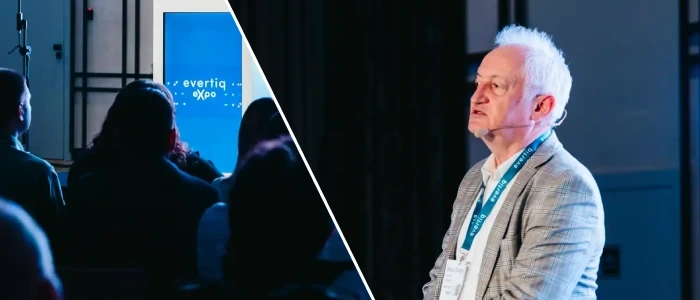
During the Evertiq Expo Kraków 2026, Jacek Małecki, CEO of Best Supply, stated that the current disruptions are not a temporary problem, but rather the beginning of a prolonged period of instability. Is the electronic components market on the brink of disaster?
Three decades of market observation
Jacek Małecki has been involved in the electronic components industry for around 30 years. In 1996, he established the Polish branch of Future Electronics. He has also worked on both the manufacturer's and the OEM's side, and currently he runs Best Supply. The company focuses on supplying components, primarily to Polish businesses, and serves a limited number of customers under a “premium support” model.
Jacek Małecki’s extensive experience allows him to view the market from several perspectives at once: a semiconductor manufacturer, a distributor, a device design company, and an outsourcing electronics assembly company. His assessment was far from optimistic.
“In my opinion, things are worse than they were in March.”
AI is consuming production capacity
The development of artificial intelligence infrastructure is the most significant source of the problem. Data centres require vast numbers of advanced processors, memory chips, power management components, networking equipment and cooling systems. The scale of investment is so great that it is changing the rules governing the entire semiconductor market.
Jacek Małecki highlighted the extraordinary concentration of this demand. According to the data presented during his talk, AI-related applications may account for an enormous share of the value of semiconductor sales, even though they represent only a very narrow section of the overall product portfolio.
“In terms of product range, it accounts for 0.2%. The number of components and their types is very limited. The issue is their value, which accounts for almost half of the entire semiconductor market.”
The problem is not that artificial intelligence consumes every type of resistor, transistor or microcontroller. Rather, it’s that a small number of global customers are prepared to reserve manufacturing capacity for years, guarantee orders, finance factory expansion, and even make capital investments in suppliers. For a semiconductor manufacturer, such an offer is hard to turn down. However, a stable contract with a major corporation means that some existing customers must receive fewer chips or wait significantly longer for them.
“Good terms, money on the table, three years of stability and strong sales. But an hour later, I would be wondering who I would have to say goodbye to, because I would not be able to provide that capacity without limiting supplies to other customers,” the speaker explained this mechanism.
The problem goes beyond factories
The availability of lithography lines is not the only factor affecting semiconductor production. Manufacturers also need special gases, chemicals, substrates, photoresists, ultra-pure water, energy and extensive logistics infrastructure. Any disruption in the supply of materials can limit the operations of the entire factory.
Jacek Małecki noted that the conflict in the Middle East introduces another layer of risk:
“Helium is a very important material in semiconductor manufacturing. It is used for cooling in factories. Qatar accounts for 30% of the global helium supply. As we know, there is currently a problem obtaining this product from the country. If that represents 30% of global supply, it must have an impact on semiconductor production. And this is beginning to happen right now,” he explained. “Certain components, including photoresists, require petroleum-derived materials. 40% of these materials come from the Middle East.”
When a significant share of supply comes from a single region, even short-term transportation problems can trigger a chain reaction. Importantly, the market does not return to normal immediately after the crisis ends. It is necessary to replenish inventories, restore regular transportation, synchronize production, and reallocate available production capacity.
“It is easy to disrupt something, but restoring stability afterward is extremely difficult,” Małecki emphasised.
In his view, it could take anywhere from six months to a year to restore a severely disrupted supply chain, and it may take even longer for the situation to fully stabilize.
Nexperia: a lesson in market dependencies
During his presentation, the CEO of Best Supply referred to the example of Nexperia, a Dutch manufacturer of widely used basic components such as transistors, diodes, logic ICs and analogue chips. These components often account for only a small fraction of the final product's value. They may cost as little as a few dozen cents, but without them, it is impossible to complete a device worth hundreds or thousands of euros.
In theory, a simple transistor can be replaced with an equivalent model from another manufacturer. In practice, however, there are three obstacles: availability, price, and the need for revalidation. Małecki gave the example of a component for which one replacement was offered with a delivery time of 45 weeks, while another was available immediately but cost $2.80 instead of about 15 cents.
“No one knows what will happen in 45 weeks. You could say that the first option is practically unavailable,” he commented on the offer, which has a completion deadline of nearly a year.
For an order of 100,000 units, the more expensive replacement would generate a cost approaching 264,000 USD. For many products, it would be impossible to pass such an expense on to the end customer.
The speaker noted that the situation is even more difficult in the automotive, medical and defence sectors. A minor change to a product may require testing, documentation, renewed design approval and proof of complete traceability.
Lead time, or when a product is effectively unavailable
The period between placing an order and receiving a component is known as the lead time. Under stable market conditions, it may amount to several or a dozen weeks. When this period is extended to 39, 45, or 52 weeks, it is no longer considered the standard delivery time.
“A lead time of 39 to 52 weeks simply means that the product is unavailable,” Małecki said.
It is difficult to predict how many devices a company will need in a year, whether the project will remain relevant, or whether the end customer will change the order. The risk is therefore transferred to the distributor or electronics manufacturer.
Long delivery times make public procurement contracts particularly difficult to fulfil. If a contractor has only four to six months to deliver a device after winning a tender, it cannot afford to wait 40 weeks for a component from an authorised source. The only remaining option may be to purchase it on the independent market, where obtaining full traceability — the ability to track the product’s journey from the manufacturer to the recipient — is considerably more difficult.
“Anyone who organizes a tender and imposes such tight deadlines without realizing how long it takes to obtain components is violating basic quality principles,” the speaker said.
Lead times are getting longer. Prices are rising.
Longer delivery times almost always result in price increases. Manufacturers justify them by referring to the cost of expanding production capacity, energy, transport, labour and logistics. Jacek Małecki noted, however, that pricing policy can be selective. The same component may be offered to different customers at different prices, depending on the customer’s importance, industry, order volume, or the results of previous negotiations.
Sometimes price changes apply only to new orders, but there are also situations in which a manufacturer updates prices for orders that have already been placed and are awaiting fulfillment.
End customers often do not know how to negotiate prices, especially when they work with EMS companies. They expect the EMS company to negotiate the prices, since it will be purchasing large quantities, including orders for other customers. This assumption is, at least partially, incorrect. The large order volumes placed by EMS companies translate into good prices only for simple and inexpensive components (passive components, discrete components, and simple semiconductors). More technologically advanced components, which determine the price of the entire product, must be negotiated during the design phase.
“Once something goes into production, no manufacturer will offer a special price because the decision has already been made,” Małecki said.
Once a particular chip has been included in the documentation and passed the necessary tests, the supplier knows that replacing it will be costly and time-consuming. In most cases, such a replacement will never take place.
This issue will be the subject of Jacek Małecki’s presentation at Evertiq Expo Warsaw on October 22, 2026. Registration for the event is now open.
Inventory as a source of competitive advantage
The natural protection against supply disruptions is inventory. For years, however, many companies regarded maintaining a large warehouse as an unnecessary way of tying up capital. The just-in-time delivery model, in which inventories were reduced to a minimum, became increasingly popular.
Jacek Małecki’s analyses indicate that companies maintaining relatively larger inventories may achieve higher profitability. This applies to both distributors and EMS companies. Of course, this requires effective inventory management, including monitoring inventory turnover, the risk of components being discontinued, and actual customer demand.
“The solution to what’s happening right now is to keep a substantial inventory of your own. You have to know how to manage it, but you should not be afraid of it,” he concluded.
EOL and the difficulty of forecasting
Another challenge is the growing number of components being withdrawn from the market under end-of-life procedures. When manufacturers want to allocate production capacity to more profitable products, older or less profitable product lines are closed. As a result, customers have only a limited amount of time to place a final order or are forced to redesign their devices.
The expert noted that companies are becoming increasingly ineffective at forecasting future demand. The paradox is that lead times of up to a year require forecasts covering a period of 12 to 18 months, while economic and geopolitical instability makes those forecasts less reliable.
Manufacturers do not know how much to order, distributors are reluctant to build inventories, and end customers delay their decisions. As a result, every participant in the supply chain attempts to reduce its own risk by transferring it to another party.
Armageddon or the new normal?
Jacek Małecki does not expect the market to collapse suddenly. Instead, his remarks point towards a prolonged period of pressure in which several factors reinforce one another. The development of AI is absorbing manufacturing capacity, geopolitical tensions are threatening supplies of raw materials and logistics, manufacturers are abandoning less profitable chips, and insufficient inventories are amplifying the effects of fluctuations in demand.
Although the defence sector does not consume as many semiconductors as data centres, sudden defence orders can also deepen shortages in selected product categories, particularly when older, certified chips or components manufactured in relatively small volumes are required.
“If the money is available, someone should build inventories covering many years of future demand. That is the only solution,” the speaker said in response to a question from the audience.
In the coming years, companies that consider alternative components during the design phase, negotiate prices, build inventories and understand the real sources of risk in their bill of materials will gain an advantage. The absence of a small transistor can halt a project worth millions. Component management is therefore no longer merely a procurement function. It is becoming one of the key elements of corporate strategy.
Jacek Małecki discussed the importance and challenges of the design phase during the panel “Electronics for Demanding Applications: From Design to System Reliability” which also featured Maciej Sobolewski from Fideltronik. The discussion was moderated by Ewelina Bednarz from Evertiq.
Jacek Małecki will return to the Evertiq Expo stage during the Warsaw edition of the event, which will take place on October 22, 2026, at the PGE Stadium in Warsaw. The next edition of Evertiq Expo Kraków will be held on June 9, 2027.