
10 years on – Brexit and the “new normal”
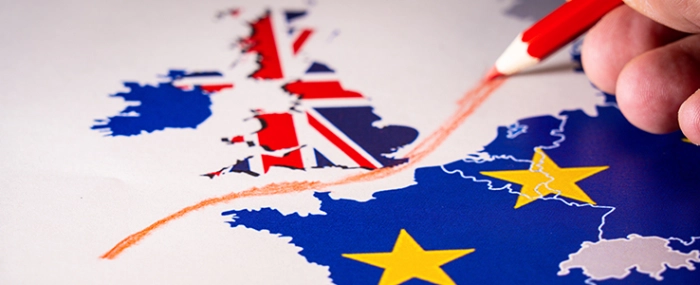
A decade after the UK voted to leave the European Union, the EMS and CEM sector is still adapting to the consequences. Brexit realised many fears around supply-chain disruption, labour shortages and regulation, but it also accelerated structural change and pushed companies to modernise operations.
A reshaped market
The UK’s departure from the EU fundamentally altered the operating environment for EMS providers. Companies that source components globally while assembling products for customers across several markets suddenly faced new barriers around logistics, compliance and labour mobility.
For companies operating in, or connected to, the UK EMS ecosystem, including multinationals such as Incap Corporation, NOTE AB, Plexus Corp, and domestic specialists like TT Electronics and Jaltek Systems, adaptation has often involved acquisitions, partnerships or creating new distribution networks.
Those with geographically diverse manufacturing footprints have generally adjusted more easily. Incap, for example, operates facilities across Europe, Asia, the US and the UK that allow it to route production within the EU for European customers while maintaining UK operations for domestic business.
On the other hand, firms with more concentrated UK operations were often forced to redesign logistics networks or establish partnerships within Europe to maintain access to EU markets.
Trade friction and logistics
One of Brexit’s most immediate consequences was the increase in bureaucracy. Before Brexit, electronics assemblies and components moved freely across the EU single market. After the cut-off, customs declarations, rules-of-origin checks and new logistics processes introduced delays and additional costs.

According to Jaltek Systems’ Steve Blythe, the initial disruption was manageable but significant, and meant having to rethink logistics and distribution arrangements.
“Trading with Europe did get harder from the outset,” he says. “There were initial frictions around red tape and customs, but we quickly worked out solutions and we were fortunate to have a loyal and understanding customer base.”
The complexity was particularly acute for EMS companies because highly efficient supply chains are central to their operations. Even short border delays can interrupt production schedules or increase inventory costs.
John Harley, VP of Business Development at electronics manufacturing company OSI Electronics UK, says that companies were largely left to solve the problems themselves.
“It took us a while to get our heads around how we could get things into Europe easily,” he says. “We didn’t get much government help, so we had to work it out for ourselves. But over time, we, like others, have managed to adapt. Now, we don’t seem to have any issues and I’d say it’s now as seamless as it was pre-Brexit.”
Regulatory divergence
Another challenge has been regulatory divergence between the UK and the EU, particularly the shift from CE marking to the UKCA certification framework. Electronics products sold in both markets may now require dual certification, increasing costs and administrative work around testing, documentation and compliance.
Again, large multinational manufacturers have generally been better positioned to absorb these costs because they already operate across multiple regulatory systems. Smaller EMS companies, however, have often felt the impact more sharply.
Consolidation and partnerships
Brexit also accelerated consolidation within the EMS sector.
One major example was Incap Corporation’s acquisition of AWS Electronics Group, which added manufacturing sites in both the UK and Slovakia. This dual-location structure gave the company a strategic advantage, where EU production could serve European customers without customs friction, while UK facilities continued to support domestic and specialist markets.
The move reflected a wider trend toward geographically distributed manufacturing networks designed to reduce geopolitical risk. Brexit, however, was only one driver behind this shift; the pandemic and semiconductor shortages also exposed vulnerabilities in global supply chains.
Other companies too pursued strategic alliances. In 2023, Jaltek partnered with a Slovenian EMS to strengthen manufacturing capabilities and gain access to production within the EU if any customers wanted the option.
At the same time, many companies focused more heavily on strengthening relationships with their existing customers. This, says Blythe, wasn’t really an issue for Jaltek however.
“We have worked for some of our clients for over 20 years. That intimacy, trust and collaboration with them is something we’ve always had, so it’s established in how we work.”
Cogent Technology CEO Gordon Watling says that Brexit did reinforce a tendency among customers to favour local suppliers.
“You’ve seen companies retrenching back to what they know, where there’s borderless trading and simply easier business,” he says. Watling notes that many customers, especially in med-tech, already preferred suppliers located nearby. “There’s not really been a new drive to ‘keep it local’ within the UK, that was already there,” he says.
Labor shortages and automation
The UK electronics sector was already facing a future skills shortage headache before Brexit, but reduced freedom of movement exacerbated the problem by limiting access to skilled EU labour.
For EMS providers operating assembly and test facilities, shortages of technicians and engineers increased wage pressure and the competition for available talent. Many responded by investing more heavily in automation and advanced manufacturing technologies, including robotics, automated inspection systems and digital production monitoring.
TT Electronics, for example, has emphasised automation as part of its broader modernisation efforts to improve efficiency and reduce reliance on manual labour. At the same time, firms widened recruitment efforts and developed stronger links with colleges and universities.
“With Brexit forcing many experienced workers to leave the sector, it accelerated the need for us to develop talent internally. Training staff and bringing in people were our main priorities,” says Jaltek’s Blythe. “We were already outreaching to schools, colleges and universities, and that work paid dividends.”
OSI Electronics UK went down a similar path. “We built relationships with universities and colleges locally,” says John Harley. “So I’d say in one respect Brexit helped focus minds on things.”
Unexpected benefits
Despite the disruption, Brexit also pushed companies to rethink operations and collaborate more closely with outside organisations, something that has provided hitherto unexpected benefits over the past decade
Jaltek, for example, became involved in the Sharing in Growth initiative, a collaborative manufacturing initiative focused on leadership development and operational improvement. It also hooked up with a series of organisations that have become key in recent years, like Make UK, STC, JOSCAR, ADS, Chamber of Commerce and others,
“We received thousands of pounds worth of leadership training via Sharing In Growth,” says Steve Blythe. “It’s been instrumental to how we run the business now.”
Gordon Watling, who previously worked at US aerospace and defence technology company Mercury Systems, believes that Brexit undoubtedly made European expansion harder for UK suppliers.
“If you have international and European expansion aims, it can only make things harder,” he says. “But because we’re largely UK-focused, the impact hasn’t been too bad for us. It really hasn’t restricted us in any way in terms of how we service our customers and it hasn’t had a huge impact on our sourcing side either,” he adds.
The move toward specialisation
Brexit accelerated an existing structural shift within the UK EMS sector. Rather than competing directly with lower-cost manufacturing hubs in Eastern Europe or Asia, many UK firms increasingly focused on specialised, high-value production.
This repositioning centres on sectors such as aerospace, defence, medical devices and industrial automation, where engineering expertise, certification and customer collaboration are often more important than low production costs.
Incap’s UK operations, for example, increasingly emphasise defence and aerospace supply chains, where security accreditation and long-term relationships carry significant value.
Similarly, Jaltek Systems focus on complex, high-mix manufacturing projects closely integrated with customer design processes. “We have two strings to our business model; design and manufacturing,” says Steve Blythe, noting that the company’s European design relationships have remained positive despite Brexit.
The shift toward localisation and nearshoring has also created opportunities for firms able to offer flexible, engineering-led manufacturing services.
For companies serving mainly UK customers, the impact has been relatively limited. “As we only supply UK customers, we have found very little disruption,” one industry CEO says. “If anything, business has picked up steadily.”
A new competitive landscape
Brexit may not have fundamentally undermined the UK EMS and CEM industry, but it has reshaped competitive dynamics within European electronics manufacturing.
Eastern European countries, including Poland, Hungary and the Czech Republic, continue to dominate high-volume electronics assembly because of lower labour costs and seamless access to the EU market.
“Unless you’ve got your own manufacturing facilities in Europe or Eastern Europe, it’s difficult,” says OSI’s John Harley.
UK-based EMS providers, meanwhile, are increasingly concentrating on specialised, engineering-intensive manufacturing.
Companies such as TT Electronics and Jaltek continue to emphasise advanced manufacturing capability, close customer collaboration and integrated design expertise.
Multinationals such as Incap occupy an intermediate position, using geographically diversified manufacturing networks to navigate regulatory and logistical barriers while continuing to serve customers across multiple regions.
Ultimately, Brexit introduced significant friction into European electronics manufacturing, but it also accelerated strategic change.
The multinationals have leveraged global manufacturing networks to maintain market access, while UK specialists have increasingly focused on high-value, engineering-driven production. Strategic acquisitions and partnerships have allowed many firms to continue operating effectively across both the UK and EU markets.
In this new environment, success increasingly depends on flexibility, specialisation and the ability to integrate manufacturing with design, engineering and supply-chain expertise.
And when viewed alongside the pandemic, geopolitical instability and semiconductor shortages, Brexit can be viewed as part of a wider decade of upheaval that has steadily reshaped the EMS and CEM sector, perhaps to one that is more resilient than previously. In that sense, a feeling of cautious optimism seems to prevail in the sector.
Back in 2022, Johan Dahl, VP of Sales EMEA at A2 Global Electronics + Solutions, told Evertiq: “It’s been a perfect storm — mergers and consolidation of OCMs; huge increases in global demand; Brexit; a global pandemic; and now the war in Ukraine. Only the future will tell us what this means.” – With the conflict in the Middle East playing havoc with global financial markets, and noises coming from the UK government of a desire to get closer to the EU, those words ring just as true today as they did then.