


From Excel to AI: The future of production scheduling in electronics manufacturing
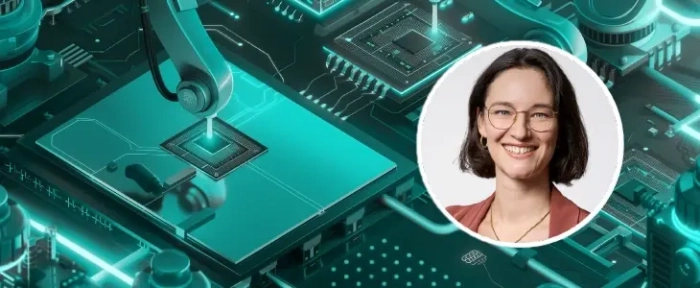
Despite increasing production complexity, many electronics manufacturers still rely on spreadsheets and manual coordination to plan their operations. Speaking to Evertiq ahead of her presentation at Evertiq Expo Berlin 2026, Mira Grünhaupt, Head of Solution Advisory at PAILOT GmbH, explains why advanced scheduling remains a challenge — and how AI-driven planning is helping factories become more flexible, responsive and competitive.
Despite growing production complexity, many manufacturers still rely heavily on Excel sheets and manual coordination. But why does advanced scheduling remain such a challenge in electronics manufacturing?
"I see two main reasons. First, the complexity in many factories has grown gradually over time. Companies have added new products, new variants, new processes and new customer requirements step by step. Excel and manual coordination often became the most pragmatic way to manage this growing complexity, even though they were never designed for dynamic production scheduling," Grünhaupt told Evertiq.
Grünhaupt identified a second reason: until recently, many available planning solutions were either too slow or too rigid to accurately reflect the realities of the shopfloor. In electronics manufacturing, realistic planning must consider numerous constraints simultaneously, including personnel skills, material availability, changeovers, limited equipment, alternative machines, process dependencies and shifting customer priorities. If a planning system requires an overnight run or cannot reflect these operational details, planners will inevitably fall back on manual adjustments.
"This is where AI-based optimisation becomes a game changer. It can handle high complexity within very short runtimes and create plans that are both optimised and realistic enough to be used in daily operations," she explained.
But scheduling complexity is not the industry's only challenge. AI is often discussed in broad and sometimes abstract terms. In practical production planning, where can manufacturers see the biggest difference between AI-supported scheduling and more traditional planning approaches?
"The biggest difference is the ability to balance multiple conflicting objectives dynamically. In production planning, there is rarely one single goal. Companies need to meet customer demand, maximise machine and personnel utilisation, reduce changeovers, control inventory, shorten lead times and react to disruptions," Grünhaupt said.
In Grünhaupt's view, traditional planning approaches often rely on fixed rules or sequential logic. Heuristics such as forward and backward scheduling may work well for individual objectives, but they quickly reach their limits when several competing KPIs need to be optimised at the same time.
"AI-supported scheduling can evaluate many possible planning scenarios and weigh different objectives against each other. It also allows companies to adapt their planning logic when business priorities change. For example, if the market shifts and on-time delivery becomes more important than maximum utilisation, the planning system can reflect that. This makes planning much more aligned with the actual business strategy," she continued.
During Evertiq Expo Berlin 2026, Mira Grünhaupt will highlight that intelligent planning systems should not be treated as purely IT-driven projects. She will explain which organisational and cultural factors are most important for a successful implementation.
"The most important factor is a clear shared vision. Everyone involved needs to understand why the company is introducing intelligent planning and how it contributes to long-term success. Usually, the business case is not just automation for its own sake. It is about improving on-time delivery, increasing flexibility, reducing firefighting and improving transparency across production operations," she said ahead of her presentation.
According to Grünhaupt, the second key factor is internal ownership.
"Successful projects need champions who continuously communicate the purpose of the change and help maintain momentum, especially during challenging phases of the implementation. Introducing intelligent planning changes routines, responsibilities and decision-making. That requires active change management and internal marketing," she explained.
Grünhaupt also points to a third factor: broad stakeholder involvement. IT, production planning, shopfloor teams, production leadership and management all need to be part of the process.
She explains that this ensures relevant requirements are captured early, operational constraints are understood and potential adoption barriers are addressed before the system goes live.
"In short, the technology has to be strong, but the organisation must also be ready to embrace new ways of working," she said.
Looking ahead, Evertiq also asked Grünhaupt how she expects AI-driven scheduling to change the way electronics factories operate over the coming years.
"AI-driven scheduling will make electronics factories significantly more flexible and responsive. Shorter lead times, smaller batch sizes and more volatile demand will increasingly become the norm. The companies that can respond quickly and still deliver reliably will have a clear competitive advantage," she answered.
Grünhaupt also expects production planning to move closer to real-time decision-making. Instead of creating a plan once and then manually correcting it throughout the day, factories will continuously re-optimise based on the latest situation on the shopfloor.
According to Grünhaupt, this will reduce manual coordination, improve transparency and enable factories to use scarce resources such as skilled workers, machines and equipment more effectively.
"In the long run, the competitive advantage will be very simple: being able to promise fast delivery and then reliably keep that promise," she concluded.
Evertiq Expo Berlin will take place on June 18. Expanding on the topics discussed in this interview, Mira Grünhaupt, Head of Solution Advisory at PAILOT GmbH, will present 'Advanced Scheduling as a Competitive Advantage: AI-Driven Planning in Electronics Manufacturing'. Registration is now open.