
Europe is building a system without a physical foundation
Europe is investing billions in artificial intelligence, semiconductors, and data centres. These investments are meant to strengthen the region’s technological position and reduce external dependencies. But the question is becoming harder to ignore: to what extent is Europe building a system on a foundation that does not physically exist?
According to Vytautas Ilgūnas, CCO in TLT PCB, the gap is structural.
“Europe is investing in AI infrastructure, but the physical foundation is incomplete,” he says.
AI runs on hardware. Hardware runs on advanced PCBs. Without advanced PCB manufacturing in Europe, control remains limited. The dependency, in this sense, is not peripheral. It sits at the core of the system.
Control follows production
For years, European companies have relied on manufacturing in Asia. What was once a cost-driven decision is now increasingly seen as a strategic vulnerability.
“It becomes strategic the moment supply is no longer guaranteed,” Ilgūnas explains. “This is no longer about cost. It is about control. If production is external, control is external.”
The industry has already seen what disruption looks like. During the COVID-19 pandemic, supply chains stalled, lead times extended, and entire sectors slowed down. Today, that experience is already fading. The risk, however, has not disappeared.
“The responsible approach is to act before the next disruption, not after it.”
At that point, the conclusion is straightforward: production must be local, not an ocean away.
Integration as a requirement
In response, TLT PCB is building a different model.
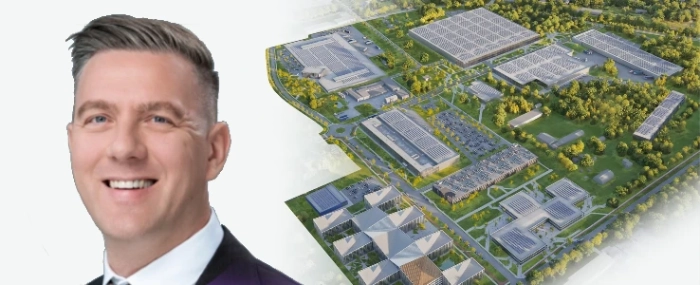
The company is developing a vertically integrated manufacturing cluster that combines PCB, electronics, and mechanical capabilities within a single ecosystem. The objective is to reduce fragmentation and regain control over how complex systems are built.
“At TLT, we are building a vertically integrated manufacturing cluster, combining PCB, electronics, and mechanical capabilities in one ecosystem,” Ilgūnas says. “For advanced technologies, this level of integration is becoming a requirement, not a choice.”
The shift reflects a broader change in how manufacturing is approached in Europe – from cost optimisation to control, resilience, and system-level capability.
No AI sovereignty without PCB manufacturing
Discussions around European technological sovereignty often focus on semiconductors and software. The role of PCBs is less visible, but fundamental.
“PCBs are the platform that connects and enables everything else. Without them, chips do not become systems.”
Without local PCB manufacturing, sovereignty remains incomplete.
To address this gap, TLT PCB is investing in a 33,000 m² advanced PCB manufacturing facility in Europe, aimed at rebuilding capabilities that have gradually moved outside the region.
Time is the limiting factor
The challenge is not only investment, but timing.
“Not much,” Ilgūnas says when asked how much time Europe has to rebuild advanced PCB manufacturing.
“Advanced manufacturing takes years to build, stabilise, and scale. Once capabilities are lost, they are extremely difficult to recover.”
TLT PCB started early.
“We started early because when the need becomes obvious, it is already too late.”
In this context, decisions made today will define who controls the next generation of technology.
“Those who secure manufacturing capacity today will control tomorrow’s technology,” he concluded.
During Evertiq Expo Lund, on May 21, Vytautas Ilgūnas will give a presentation titled, ‘AI needs hardware: rebuilding advanced PCB manufacturing'. Registration is now open.