


European EMS consolidation accelerates as defence demand reshapes the market
European electronics manufacturing services (EMS) providers are entering a new phase marked by consolidation, rising defence demand, and increasing geopolitical pressure on supply chains.
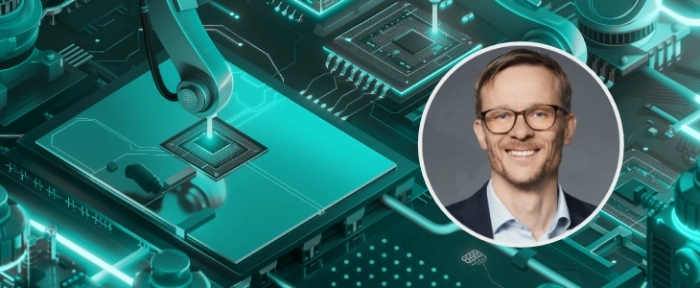
According to Riku Hynninen, CEO and founder of Agame Oy, acquisition activity among European EMS companies has intensified as firms seek scale, market access, and geographic resilience.
Hynninen, who tracks several publicly listed European EMS companies, says the pace of consolidation reflects structural characteristics of the market.
“Seven European EMS companies that I follow announced 14 acquisitions last year,” he tells Evertiq. “The European EMS market is still very fragmented with more than 2,000 small and mid-sized EMS companies.”
Even the region’s largest player, Zollner Elektronik AG, remains relatively small compared with leading EMS firms in the United States and Asia, leaving significant room for consolidation across the sector.
Beyond fragmentation, improved financial positions are also enabling deal activity. Following inventory peaks in 2023 and 2024, many EMS companies have reduced working capital and strengthened their balance sheets, giving them greater capacity to pursue acquisitions.
“Companies have a high interest to deploy free capital into acquiring new business and create value for shareholders,” Hynninen says.
Another key driver behind recent acquisitions is the growing importance of the defence and aerospace sector. According to Hynninen, companies are increasingly acquiring capabilities rather than attempting to build them organically.
“In this segment, it might take several years to organically develop the defence business,” he says, adding that acquisitions allow companies to position themselves more quickly in a market that is expanding rapidly.
The defence sector has gained momentum across Europe since the Russian invasion of Ukraine, which has prompted governments to increase military spending and strengthen domestic industrial capabilities.
Before 2022, defence-related business played only a limited role in many EMS companies’ portfolios, Hynninen says. Today, the share is growing steadily.
“My estimate is that defence-related business accounts for roughly 10% overall,” he says. “I would expect that it will grow closer to 20% over the next five years.”
Companies already established in the segment are particularly well positioned to benefit. Hynninen highlights Kitron as an example, noting that defence and aerospace could account for more than 30% of the company’s total business in 2026.
However, growth in the defence segment is not the only factor shaping strategy for European EMS providers. Increasing geopolitical fragmentation and shifting trade policies are forcing companies to reconsider their global manufacturing footprints.
Most European EMS companies remain heavily focused on regional production, with relatively few operating global factory networks. According to Hynninen, only a small group of European EMS firms currently have manufacturing presence across all major regions – including North America, Europe, China, and Asia outside China.
As geopolitical tensions continue to influence trade policies, companies are increasingly trying to offer customers more resilient supply chain options.
“The core strategy is to offer cost-efficient resilience for constantly evolving geopolitics and trade policies,” Hynninen says.
This may include establishing production capacity in Asia outside China or securing manufacturing locations in the United States to comply with potential trade restrictions and local sourcing requirements.
While building new factory capacity is relatively straightforward, adapting the supply chain remains a greater challenge.
“The true struggle is how to de-risk the material and component supply chains,” Hynninen says. “The industry is used to thinking cost-first, and proposing a more expensive bill-of-material to improve supply chain resilience is not always well received by customers.”
Capacity constraints also complicate efforts to regionalise supply chains, particularly as production of certain components remains heavily concentrated in specific countries.
Looking ahead, Hynninen believes the defence sector will remain the strongest structural growth driver for European EMS providers in the coming years.
At the same time, traditional EMS segments such as industrial electronics, energy, and medical technology are currently experiencing modest growth, while the European automotive sector has been weaker, forcing some EMS companies to reassess their exposure.
Globally, other technology trends are shaping the EMS landscape. Outside Europe, investment in artificial intelligence infrastructure and data centres has created major opportunities for manufacturers such as Celestica, which has seen significant growth tied to the sector.
For European EMS companies, 2026 will provide several important signals about the direction of the industry.
After a wave of acquisitions in recent years, Hynninen says the next question is whether those deals will deliver the expected financial results.
“It will be interesting to see how well companies are able to realise the value from the acquired companies,” he says, pointing to revenue growth and profitability as key indicators.
The performance of traditional EMS markets outside defence will also remain an important barometer for the industry.
Hynninen will discuss these trends and strategic developments in more detail during his keynote presentation at Evertiq Expo Tampere on March 26, 2026, where he will examine consolidation, defence demand, and the evolving competitive landscape for European EMS providers.
Despite the uncertainties facing the industry, he expects the coming year to provide plenty of developments to watch.
“No matter what perspective we are looking at it, the year 2026 will certainly be exciting to follow.”