
Italy, France and Germany push EU towards critical minerals stockpiling
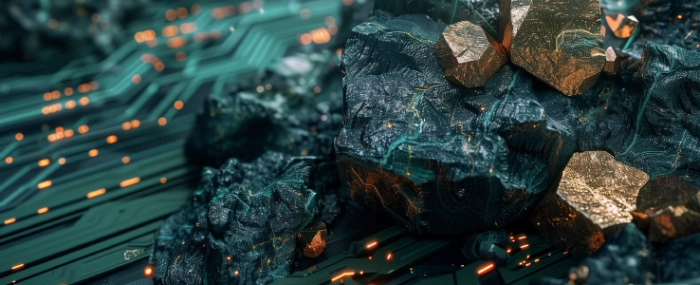
Europe’s three largest economies are moving to place critical raw materials into the realm of strategic reserves, signalling that access to key industrial inputs is no longer viewed as a purely commercial matter.
According to sources cited by Reuters, Italy, France and Germany are leading discussions within the European Union on the creation of a coordinated stockpiling system for critical minerals. The talks are still at an early stage, but the direction is clear: physical reserves of selected materials could become part of Europe’s broader resilience planning.
The proposal reflects a shift that has been building for several years. Critical minerals have moved from the periphery of industrial policy to its core, as supply disruptions, export controls and geopolitical tensions have exposed how concentrated many upstream supply chains have become. Evertiq previously examined how rare earths and critical minerals have shifted from niche industrial inputs to strategic levers in the global technology economy.
Reuters reports that the initiative is being framed in the context of crisis preparedness. Just as Europe has built up gas storage and strategic oil reserves, policymakers are now considering whether similar mechanisms are needed for materials essential to energy systems, digital infrastructure and advanced manufacturing.
While no definitive list has been agreed, the materials under discussion are understood to include those used in batteries, semiconductors and power electronics — sectors where European industry remains deeply dependent on imports and on processing capacity located outside the EU.
For the electronics industry, the implications are structural rather than short-term. Stockpiling at government level introduces a new actor into already tight global markets. Materials that would otherwise circulate through commercial supply chains may instead be directed into national or EU-level reserves, particularly in periods of perceived risk.
This does not necessarily imply immediate shortages. However, it changes the logic of procurement. Long-term access, political alignment and supply security begin to matter as much as price and delivery times.
The discussions also suggest a growing lack of confidence that global markets alone can guarantee stable access to critical inputs. Over the past year, export licensing regimes, targeted controls and industrial policy measures have become more common among major powers. Europe’s debate on stockpiling can be seen as part of this broader redefinition of how strategic materials are managed.
The move follows similar developments elsewhere. As previously reported by Evertiq, the United States is preparing its own large-scale stockpiling programme for critical minerals, backed by federal financing mechanisms. Producers in allied countries, including Australia, have already signalled their expectation that future supply may increasingly be channelled through such strategic frameworks rather than purely commercial contracts.
Europe’s approach, however, faces its own constraints. Unlike energy, where storage infrastructure and regulatory models are well established, stockpiling minerals raises questions about governance, financing and market impact. Decisions will need to be made about which materials qualify as strategic, how reserves are rotated, and under what conditions they are released.
For now, the discussions led by Italy, France and Germany mark an important political signal. Critical raw materials are no longer treated solely as commodities traded on global markets. They are increasingly viewed as strategic assets — small in volume, but central to the functioning of Europe’s industrial and technological base.