
Can memory manufacturing return to Germany? Neumonda lays out its case
When German memory company Neumonda talks about bringing semiconductor memory manufacturing back to Germany, it sparks curiosity — not about the technology itself, but about the scale, the investment needed, and whether it’s actually possible.
In April 2025, German memory companies Neumonda and Ferroelectric Memory Company (FMC) announced a collaboration aimed at commercialising non-volatile DRAM based on ferroelectric hafnium oxide (HfO₂). The partnership was presented as a step toward re-establishing semiconductor memory manufacturing in Germany – a segment that largely disappeared from Europe.
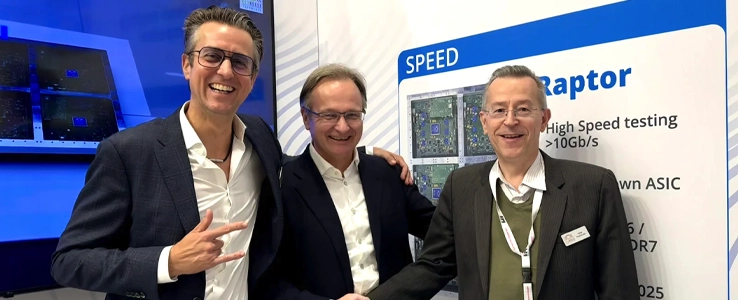
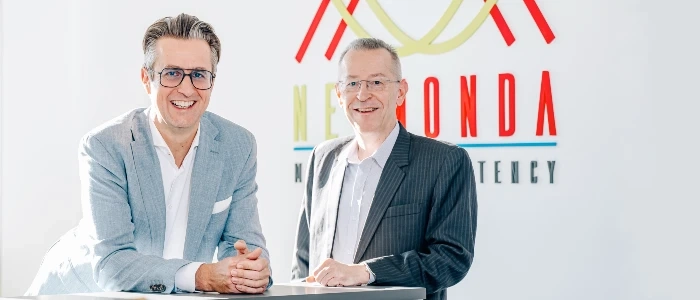
Since the announcement, FMC has secured additional funding for their fabless operation to accelerate the commercialisation of its DRAM+ and 3D CACHE+ memory products, raising questions about how quickly the collaboration can move beyond development and into production. Against this backdrop, Neumonda CEO Peter Pöchmüller and COO Marco Mezger addressed some of the challenges behind their stated goal of bringing memory manufacturing back to Germany in an interview with Evertiq.
Competing without scale
Rather than attempting to rival established DRAM manufacturers on cost or volume, Neumonda says its strategy is to focus on market segments that are increasingly underserved by large suppliers.
Your vision of bringing memory manufacturing back to Germany is bold, but given the immense capital, talent, and supply chain infrastructure already concentrated in Asia and the US, what specific steps – beyond technical collaboration – are being taken to compete and avoid becoming a niche research-only player?
“That is exactly our strategy. We might be a niche player in memory, but we don’t think we are a niche research player. It is impossible to compete with the big suppliers on cost or consumer products, so that’s not our target. Our strategy is to fill the gaps they leave behind,” Peter Pöchmüller explained to Evertiq.
As an example, Pöchmüller pointed to the ongoing withdrawal of major memory manufacturers from DDR4, despite continued demand from industrial applications.
“Industrial applications will need DDR4 for many more years,” he said.
Beyond legacy DRAM, Neumonda plans to offer specialised memory solutions tailored to specific temperature ranges, form factors, and qualification requirements. The company is also positioning itself as a testing and qualification partner, enabling customers to secure their supply chains by validating third-party memory products from any manufacturer.
“This can be done in a very short time frame,” Pöchmüller said, “So you see, we are not niche in testing. We will be fully independent, with solutions of our own that do not require secret IP from wafer manufacturers or other third parties.”
Marco Mezger adds that the company sees a strong opportunity in AI and edge AI applications with the unique ferro-based product.
“None of the big players has such a solution, and this will open up an entirely new market and support the growth of ‘AI everywhere’. In that area, our research is also not niche.”
From prototype to production
Ferroelectric memory technologies have long been viewed as promising, but commercialisation – particularly at high volumes – has proven difficult. Neumonda argues that hafnium oxide fundamentally changes the risk profile.
Nonvolatile DRAM based on ferroelectric HfO₂ is disruptive in theory, but commercialisation is another beast. How do you plan to navigate the high-risk path from prototype to high-volume production?
“It is not so disruptive when you consider that hafnium oxide is a material that has been researched for many years and is well understood by now. So, what is different now? Why are we confident that we will be successful?” Pöchmüller asks before citing three reasons.
Firstly, unlike traditional ferroelectric materials, HfO2 is 100% CMOS compatible.
Secondly, FMC has already developed circuit designs and product specifications based on current ferroelectric memory cell technology that are commercially attractive, with market introduction planned in the near term.
Thirdly, FMC has found a way to easily integrate into the current high-volume process of DRAM wafer factories without much process adaptation.
“This dramatically lowers production risks and, with it, the threshold for its use in a variety of applications,” he said.
A different time, different dynamics
Europe has seen several ambitious semiconductor projects struggle or fail over the past decades; both executives argued that the broader industrial and political environment has changed significantly.
There’s been a lot of excitement around revitalising Europe’s semiconductor industry, but we’ve also seen ambitious projects struggle to gain traction. What gives you confidence that this initiative will have staying power — and what kind of support, whether from government or industry, do you need to make it a long-term success?
“There is a common notion that the semiconductor industry left Europe because of high labour costs. But that’s not the real reason. It requires huge investments and backing from financial institutions and large companies. In the 1990s, Siemens could finance such factories, but even a company like Siemens was too small. That’s why the semiconductor business was eventually spun off,” Pöchmüller explained.
He pointed to the history of the DRAM industry, where dozens of companies have exited the market over the past 50 years.
“So, if you take a look at the top three DRAM manufacturers of the past 50 years, you will see the names of about 30 different companies. Most of them either exited the memory market, were acquired, or went bankrupt. The only exceptions are Micron, Samsung, and SK hynix. However, two of them were close to bankruptcy twice.”
And, as Pöchmüller puts it, this is not because the majority of these companies were incompetent and doomed to fail.
"It’s because in the long term, they couldn’t compete with companies that benefited from governmental subsidies, while they didn’t get any. Similarly, when Siemens took a cumulative look at the profit and loss of its semiconductor factories, it found that the risk and investments needed were too high, and the profit was almost negligible.
Thus, sustained government subsidies and conglomerate-backed investments elsewhere distorted competition, making it increasingly difficult for European players to compete without similar support.
So what is different this time?
“The world now sees the importance of the semiconductor industry for the global economy. The supply chain crisis in 2022 revealed the dependence on this industry, as industrial equipment worth millions of US Dollars could not be delivered because a handful of chips could not be supplied,” Marco Mezger said.
Mezger pointed to the emergence of semiconductor support programmes worldwide, as well as rising geopolitical tensions, shifting trade policies, and tariffs, as key drivers behind renewed interest in local manufacturing.
“Qimonda could have been saved with just EUR 500 million in credits,” he said. “Now we pay a much higher price. And it is still a small price to safeguard the European economy from disruptions and exorbitant prices during supply crises.”
Pöchmüller added that Europe is increasingly recognising semiconductors as a strategic industry requiring long-term commitment.
“Just look at FMC as an example. It has been able to secure additional funding of EUR 100 million for their fabless operation to put their plan into reality and accelerate the commercialisation of their DRAM+ and 3D CACHE+ memory chips. With these products, FMC will set new standards in terms of energy efficiency and performance, which is exactly what data centres are hungry for now.”
Whether these efforts will result in a sustained revival of memory manufacturing in Germany remains uncertain. For Neumonda and FMC, however, the combination of technological readiness, targeted market positioning, and renewed political and financial support suggests that the ambition is no longer merely theoretical.
“So hopefully, bringing semiconductor memory back to Germany will not remain a theoretical exercise, but a real opportunity,” Pöchmüller said.