


European battery industry set to receive €1.5 billion boost
The Battery Booster Facility established by the European Commission is expected catalyse private investment, accelerate industrial deployment and strengthen Europe’s industrial competitiveness and strategic autonomy in clean technologies.
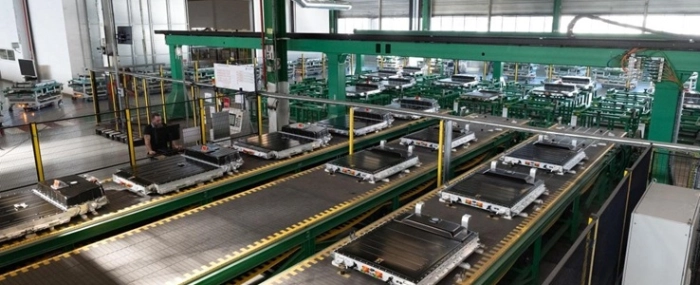
The European Commission has formally established the new Battery Booster Facility. Mobilising up to EUR 1.5 billion from EU Emissions Trading System (ETS) revenues in the Innovation Fund, the Booster will help battery cell manufacturers to ramp up production in Europe, according to a media release.
For the first time, the Commission will provide direct support in the form of interest-free loans.
The Battery Booster Facility is expected to catalyse private investment, accelerate industrial deployment and strengthen Europe’s industrial competitiveness and strategic autonomy in clean technologies. Eligible projects must produce battery technology suitable for use in electric vehicles (EVs), although off takers may use the products for other purposes. Production must be located within the European Economic Area (EEA), with a minimum production capacity of 10GWh.
The maximum loan amount per project is EUR 500 million. The loan instrument has been chosen over traditional grants to encourage sound capital management, drive companies towards commercial viability faster and complement private sector investments. Applications will be evaluated based on their technical and financial maturity, and their added value for the European economy, the media release said.
The Innovation Fund, financed by revenues from the auctioning of allowances under the EU ETS, supports the deployment of innovative net-zero technologies, including batteries, helping to boost the EU’s industrial manufacturing capacity.
“Europe’s battery industry has made important steps forward but is now at a critical juncture. This is the right time to support them to reach commercial success. The Battery Booster Facility does exactly that: it steps in at the most critical and capital-intensive phase of industrial scale-up and does so in a way that is financially sound,” said Wopke Hoekstra, European Commissioner for Climate, Net Zero and Clean Growth. “It attracts private investment and drives companies towards full-scale production.”
“The €1.5 billion Battery Booster Facility is about ensuring that Europe masters this critical asset for the clean transition. We need batteries made in Europe for applications in strategic sectors such as automotive, grid management or drones for defence,” said Stéphane Séjourné, Executive Vice-President, European Commission, for Prosperity and Industrial Strategy. “At the most critical stage of industrial scale-up, it will give selected manufacturers in Europe the support they need to reach full production and compete globally.”