


Natrion launches battery product lines for uncrewed systems
Designed specifically for uncrewed, battery-powered systems like drones, surface and underwater vessels, ground vehicles, and humanoids, Natrion’s cells deliver nearly 80% more energy density than available Li-ion cell alternatives.
American battery materials company Natrion has announced it will begin production of defense-optimized battery cells, in addition to its flagship battery components.
Designed specifically for uncrewed, battery-powered systems like drones, surface and underwater vessels, ground vehicles, and humanoids, Natrion’s cells deliver nearly 80% more energy density than available Li-ion cell alternatives while remaining cost-competitive and certifiable to National Defense Authorization Act (NDAA) Section 842 supply chain requirements, Natrion said in a press release.
This new product line builds on Natrion’s longstanding partnership with the United States Air Force and Navy, which have awarded the company multiple contracts since the company’s inception.
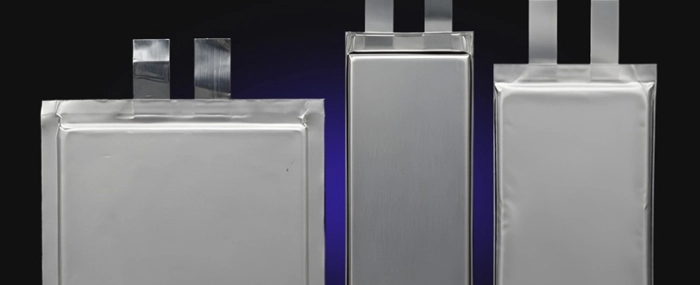
Natrion is expanding its capabilities to manufacture full battery cells end-to-end in support of these new product lines. Called Cirrus and Stratus, the new cells leverage anode-free and lithium-metal architectures, respectively, based on the company’s proprietary Active Separator material, the company said.
“Despite their vastly different requirements, current military systems have long been forced to rely on one-size-fits-all lithium-ion batteries that increase battery costs and waste precious rare minerals, while being poorly optimized for their mission. It’s a lose-lose,” said Alex Kosyakov, cofounder and CEO at Natrion. “Today, we’re fixing that: creating mission-optimized battery cells at a dramatically lower price point, with better endurance and capability, reduced reliance on rare minerals, and manufactured on American soil.”
“Higher-energy density Li-ion cells exist, but the tradeoff for performance is often much higher cost,” said Philip Lee, Natrion’s VP of Business Development for Asia-Pacific and former naval aviator in the Republic of Korea Navy. “Attritable uncrewed systems need inexpensive power sources that are readily replaceable with robust, local production supply chains, in addition to being very high in energy density. That is what we are offering with Cirrus and Stratus.”