



Tokyo wants to build a city-sized testbed for humanoid robots
A Tokyo university is planning a futuristic district where humanoid robots, autonomous vehicles and drone deliveries will operate as part of everyday urban life — turning an entire neighbourhood into a live test environment for next-generation technologies.
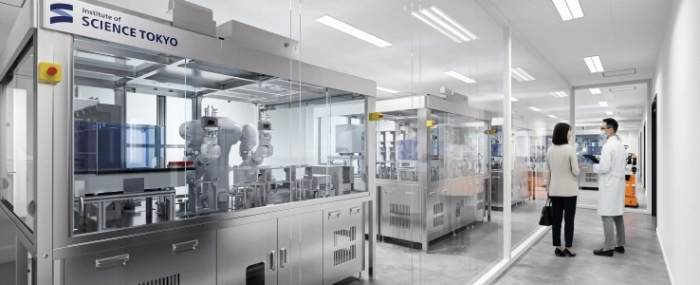
The project, first reported by Nikkei Asia, centres around a planned 39-storey complex in Tokyo that could partially open by 2031. According to reports, the development will function as a “living laboratory” where technologies are tested not behind closed doors, but in real urban conditions.
Humanoid robots appear to be at the heart of the vision.
“Humanoid robots are key to realizing future cities,” said Kei Sakaguchi, professor at Institute of Science Tokyo, who is involved in the project.
The plans go far beyond robotics alone. The district is expected to include autonomous transport systems, AI-supported healthcare monitoring, sensor-equipped infrastructure and robotics-assisted food production. Restaurants in the area may even adapt menus based on visitors’ health data collected through wearable devices.
Around 70 companies and organizations are reportedly participating in the initiative, including SoftBank and Hitachi.
The project reflects a broader acceleration of robotics and “physical AI” development in Japan, driven by labour shortages, demographic pressure and growing industrial automation needs. Japan has increasingly positioned humanoid robots not as futuristic curiosities, but as practical infrastructure for manufacturing, logistics, healthcare and urban services.
The timing is notable. Across Asia, investment in embodied AI and humanoid robotics is rapidly intensifying. Chinese companies are scaling robot training centres, while Japanese manufacturers and technology firms are focusing on integrating AI into real-world industrial and urban environments.
For the electronics industry, the implications could be significant. Humanoid robots require increasingly advanced sensor systems, power electronics, AI accelerators, embedded computing and connectivity infrastructure — creating demand across large parts of the electronics supply chain.
Japan has long been one of the world’s leaders in industrial robotics. But projects like this suggest the next phase may be less about isolated factory automation and more about integrating robotics directly into everyday urban ecosystems.