



INVISIBLE ARCHITECTS OF MINIATURIZATION: SMD RESISTORS IN MODERN ELECTRONICS
- SMD Resistors – a wide selection based on key parameters
- Resistor networks – compact solutions for precise circuits
- SMD Resistors as the foundation of electronic circuit miniaturization
Although resistors have never been among the largest electronic components, they have also undergone widespread miniaturization. Over time, small, usually carbon cylinders became too large, especially around miniature integrated circuits. Today, resistors are primarily encountered as small rectangular blocks adapted for surface-mount device (SMD) assembly. Their small physical size, much smaller than previously used through-hole resistors, has translated into the possibility of even greater miniaturization of circuits used in electronic devices. The density of component placement is increasing, resulting also in less material consumption, lower production costs, as well as improved energy efficiency of devices. In today’s world, the use of ever smaller components by electronics manufacturers is no longer just a convenience but also a necessity if they want to meet current technological standards.
One of the manufacturers of miniature resistors, whose offer is available at TME, is Panasonic. A company well-known for many years not only for producing components but also entire devices valued for their reliability and quality.
SMD RESISTORS – A WIDE SELECTION BASED ON KEY PARAMETERS
In the category of SMD resistors, you will find components covering the full range of resistances, from the smallest available value of 0Ω to 10MΩ. Components limiting the current value are placed in common housing variants adapted for surface-mount assembly; most of them are available in imperial sizes 0603 and 0805, but smaller and larger packages (from 0201 to 2512) are also available. Tolerance is another characteristic parameter of resistors. For most Panasonic components, tolerance values are ±1%, ±0.5%, and ±0.1%, but resistors with smaller or greater accuracy are also available. This way, the manufacturer can meet even the most demanding project requirements. It is also worth mentioning that all resistors comply with the AEC-Q200 standard, and their operating temperature depends on the specific model, ranging from -55°C to 175°C.
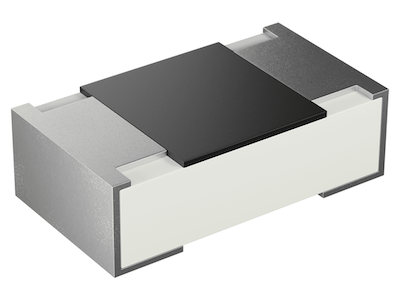
→ SMD Resistors from Panasonic
RESISTOR NETWORKS – COMPACT SOLUTIONS FOR PRECISE CIRCUITS
Besides classic resistors, Panasonic also offers resistor networks, which enable designing even more compact electronic circuits. The resistance values of these networks range from 0Ω to 1MΩ, with tolerances of ±1% or ±5%. The number of resistive elements in the network depends on the model and can be 2, 4, or 8. Like resistors, the networks conform to AEC-Q200 standards and are suitable to operate in temperatures from -55°C to 155°C.
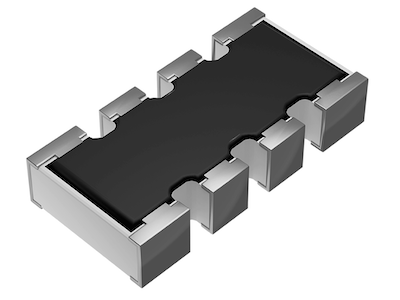
SMD RESISTORS AS THE FOUNDATION OF ELECTRONIC CIRCUIT MINIATURIZATION
Miniature SMD resistors, though often overlooked in the forefront of electronic projects, are actually among the key components enabling the development of modern, compact, and energy-efficient devices. They are the “invisible architects of miniaturization” allowing designers to combine high component density with reliability and precision in circuit operation. Panasonic solutions perfectly meet these demands, offering a wide selection of SMD resistors and networks with stable parameters, high accuracy, and resistance to harsh environmental conditions. Thanks to this, components of this brand are used both in consumer electronics and in demanding industrial and automotive applications, where quality and repeatability are crucial.
.png)