



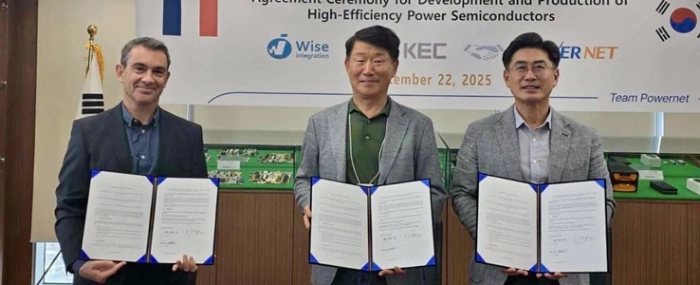
Wise, Powernet, KEC to co-develop advanced SMPS solutions
Wise will supply its GaN power devices, digital-control expertise and technical support; Powernet will lead the development of new SMPS designs using Wise’s WiseGan and WiseWare technologies; KEC will manage backend manufacturing.
France’s Wise Integration and South Korean companies Powernet and KEC have announced the signing of a strategic memorandum of understanding (MoU) to co-develop next-generation switched-mode power supply (SMPS) solutions designed specifically for AI server applications in South Korea.
The partnership aligns with the country’s push to expand AI infrastructure and build out the next generation of high-density data centers, according to a media release.
Under the agreement, Wise Integration will supply its GaN (gallium-nitride) power devices, digital-control expertise and technical support. Powernet Technologies Corporation will lead the development of new SMPS designs using Wise’s WiseGan and WiseWare technologies. KEC will manage backend manufacturing, including module integration and system-in-package production tailored to the thermal and reliability demands of AI-server racks.
In addition to accelerating the design and development of competitive AI-server power supply solutions and creating business opportunities in Korea’s AI server market, the project aims to shorten the solutions’ time-to-market using WiseGan and WiseWare technologies. The collaboration builds on an earlier partnership between Wise Integration and Powernet, launched to serve OEMs that require compact, digitally controlled power-supply systems for faster, smaller and more energy-efficient electronic equipment, the media release said.
“Korea is moving quickly to build the next generation of AI data centers, and power architecture is a critical piece of that effort,” said Ghislain Kaiser, CEO of Wise Integration. “Working with Powernet and KEC lets us bring GaN-based digital control into server-grade designs at scale — delivering the efficiency, thermal performance, and responsiveness that modern AI hardware depends on.”