




Nvidia pilots chip-tracking software amid rising smuggling concerns
Nvidia is piloting a new software feature that can verify the physical location of its AI chips, aiming to make illicit GPU diversion and smuggling significantly harder. The initiative, described in detail by Reuters, uses telemetry already present in data-centre deployments to estimate where a device is operating — without modifying the chip itself or embedding direct GPS-style hardware tracking.
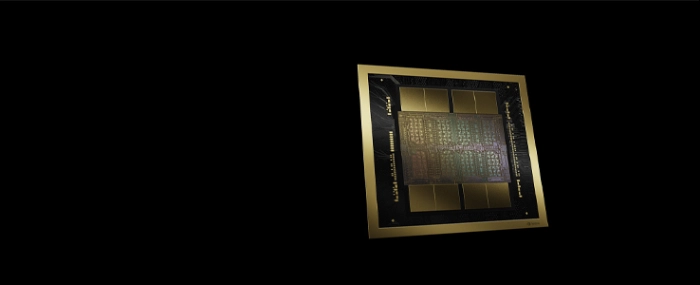
According to Reuters, the system uses communication latency between deployed GPUs and Nvidia servers to infer the country or region in which a chip is running. The feature will be available for the newest Blackwell accelerators, and Nvidia is examining whether older generations such as Hopper or Ampere could also be supported.
The move is driven by increasing scrutiny of AI-class hardware exports. Reuters has documented several recent attempts to route Nvidia chips into restricted territories, including schemes using front companies and concealed logistics. These cases have strengthened calls in Washington for better hardware traceability and tighter compliance for advanced accelerators.
The software is optional and must be installed by operators, but the idea has already raised privacy and security questions — especially in cross-border environments. Chinese regulators have reportedly asked Nvidia for clarification, concerned that location verification could act as a monitoring mechanism. Nvidia has denied any hidden access or backdoor functionality.
For the wider electronics industry, Nvidia’s approach highlights a shift towards compliance-driven infrastructure. As export controls and geopolitical pressures reshape supply chains, data-centre operators and OEMs may start treating hardware traceability as a strategic asset rather than an afterthought. In Europe, where dual-use regulations are increasingly stringent, location attestation could offer additional assurance when structuring international deployments or reporting to regulators.
In practical terms, this mechanism could make informal GPU diversion less attractive and riskier to execute. While enforcement still depends on customer cooperation, the presence of telemetry may reduce opportunities for resale or relocation into unauthorized clusters.
High-value AI hardware is entering a phase where lifecycle governance and export compliance may become integral to deployment. Nvidia’s pilot does not impose mandatory controls, but it sets an early precedent the semiconductor industry will be watching closely.