

© NXP
Components |
NXP with USB 3.0 SuperSpeed Redriver
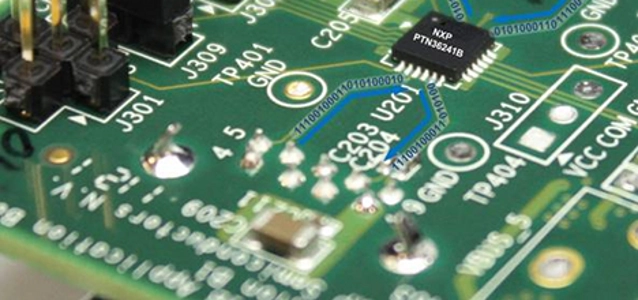
NXP Semiconductorshas released a USB3.0 SuperSpeed redriver, the PTN36241B – a dual-channel device that supports 5 Gbps per channel with optional settings that provide a high level of extendability.
As computing systems become faster, signal integrity tends to deteriorate more rapidly than in slower systems. The PTN36241B redriver provides signal equalization on a weakened signal, followed by transmit de-emphasis, thus maximizing link performance, enhancing signal integrity and improving system reliability.
To support applications that require a greater level of configurability, the PTN36241B redriver delivers intelligent multiplexing of the I2C-bus interface with quinary (5-level) pins for unmatched flexibility. The PTN36241B redriver supports auto-compliant technology that will enable compliance testing, controlled by the internal state machine, eliminating the need for a separate hardware compliance pin.
Technical Features:
- Supports USB3.0 SuperSpeed at 5Gbps - Intelligent I2C-bus multiplexing quinary (5-level) logic configuration options delivering ultimate flexibility - Signal integrity enhancements compensate for high frequency losses and inter-symbol interference - Selectable output swing, transmit emphasis, receive equalization, and input signal threshold improve device flexibility - Rx termination indication and detection enhance Hot Plug capability - LFPS detection and forwarding - Intelligent Power management with multiple power saving modes reduce power dissipation - ESD protection: HBM 8 kV, CDM 1 kV - 3.3-V power supply - Available in a HVQFN24 4-mm x 4-mm package with 0.5-mm pitch Availability and Pricing - The NXP PTN36241B redriver is available immediately. Pricing is contingent on volume, starting at USD 1.00 for quantities under 1'000. ----- Image © NXP“USB 3.0 is 10 times faster than USB 2.0, but a major drawback has been a corresponding loss of signal integrity over longer cable lengths. To compensate for a long trace between the USB 3.0 controller and connector, it is becoming more common to require a redriver, particularly as manufacturers such as Intel start to integrate USB3 directly into the chipset,” said Grahame Cooney, general manager, High Speed Interface product line, NXP Semiconductors.