- 09:00 - 09:45Optimization of electronic system design for component cost and availabilityJacek Małecki - CEO & Founder - Best Supply
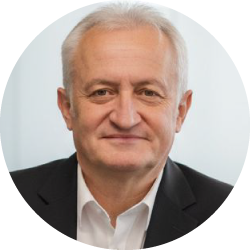
The price of an electronic product leaving the production line may seem to depend primarily on production volume. While this is certainly an important factor, many other elements determine the final cost. Only a limited number of companies in the electronics industry have the expertise to optimise the cost of the final product already at the design stage.
The presentation will showcase best practices in this area from Poland and abroad. In addition to cost, another key factor influencing a product’s market success is time to market and the ability to ensure fast delivery. In the current market environment, where component lead times can often exceed 12 months, this can sometimes be more important than achieving the lowest possible price.
The involvement of multiple parties in product design and manufacturing further complicates the process. In addition to OEMs themselves, external R&D companies, EMS providers, distributors, and component manufacturers all play a role.
The presentation will highlight several straightforward measures that can be implemented at the R&D stage to significantly improve product cost, time to market, and continuity of supply.
The presentation will be delivered in Polish.
- 09:50 - 10:20Agile automation for high-variety production: requirements and engineering approachesMaik Schurrer - CEO - Pematech

Increasing product variety, short development cycles and volatile markets require automation systems that can be quickly adapted to changing products and processes. Conventional, statically designed systems often reach their limits in this situation. What is needed are modular concepts, digital automation architectures and agile development processes that make mechanics, software and testing technology flexibly scalable.
The presentation shows how companies can successfully implement automation with a wide range of variants. The main focus is on three factors: agile project planning, powerful software with recipe management and optimised set-up capabilities. Selected case studies will be used to demonstrate how adaptive mechanics, flexible software architecture and intelligent setup concepts interact to implement high-variety production. Together, these modules enable modern, adaptive manufacturing that makes variety manageable, increases efficiency and keeps companies competitive in the long term.
The presentation will be delivered in English.
- 10:25 - 11:25Growth abroad, stagnation at homeDieter G. Weiss - CEO & Founder - in4maAnna Żurek-Kasiewicz - in4ma

The global EMS market has been growing 2025 at incredible speed and is continuing to grow 2026. We are seeing better growth rates in 2026 in Europe as well, but by far not what we see in other global regions.
While order backlog is growing the supply chain is increasingly causing us problems.
What is happening in the EMS market and in the supply chain. Anna Zurek-Kasiewicz and Dieter G. Weiss of in4ma market research will explain the global development, the problems in the supply chain and why there is lots of reasons to remain worried about what the future will bring.
The presentation will be delivered in English.
- 11:30 - 12:15Design errors or EMC issues? – A practical approach to troubleshootingDominik Kowalczyk - Explosion Protection Specialist - Dacpol
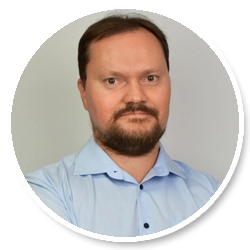
This presentation will explore the analysis of PCBs and electronic assemblies with the aim of identifying electromagnetic compatibility (EMC) issues during the early stages of compliance assessment. As more and more companies are performing parts of their EMC testing in-house, it is increasingly important for PCB designers and electronics engineers to understand the most common challenges that can arise during the design process.
The presentation will introduce Langer's EMC testing solutions for emission and immunity measurements, as well as equipment for detecting electric and magnetic fields and tools that help engineers locate sources of interference in electronic prototypes.
The aim of the presentation is to demonstrate how effective EMC analysis at an early stage of product development can reduce the risk of costly issues later in the production process and significantly shorten the time required for laboratory testing.
The presentation will be delivered in Polish.
- 12:20 - 13:10Benchmarking Europe’s leading EMS companies: Profitability, capital efficiency and M&A capacityRiku Hynninen - CEO & Founder - Agame Oy
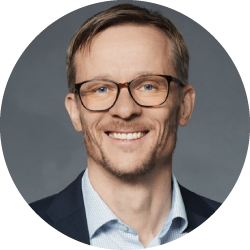
In this presentation, Riku Hynninen will share his financial performance benchmarking of 10 leading European EMS companies. He will discuss how differences in depreciation, interest, and taxes impact net profitability, and evaluate which companies have the strongest capability for further M&A following recent industry consolidation. Finally, he will examine key industry benchmarks for capital efficiency, net working capital requirements, and return on equity. The presentation will define concrete benchmarks for profitability, M&A firepower and capital efficiency in EMS industry.
The presentation will be delivered in English.
- 13:15 - 13:45Checking the correctness of THT through-hole assembly using automated optical inspection (AOI)Karol Sowa - Company Owner / Process Specialist - Sowa Electronics

During the lecture, we will present available solutions in the field of automated optical inspection (AOI) for THT through-hole assembly both before and after the soldering itself. We will discuss the available 2D and 3D technologies and talk about simultaneous inspection of the top and bottom sides of printed circuit boards.
The presentation will be delivered in Polish.
- 13:50 - 14:20Electronic component reclamation as a strategy for supply chain resilience, quality assurance and sustainabilityStefan Theil - CEO - Factronix

The electronics industry is increasingly facing challenges such as component obsolescence, extended lead times and supply chain disruptions. At the same time, large quantities of fully functional electronic components are discarded due to product discontinuations, excess inventory or manufacturing fallouts.
Component reclamation and reconditioning offer a practical way to address these challenges. Components recovered from existing assemblies or surplus inventories can be safely reintroduced into manufacturing or service supply chains after controlled technical processes such as reballing, retinning, automated inspection and electrical testing.
This presentation explores how component reclamation can mitigate supply risks, extend product lifecycles and reduce electronic waste. It will also discuss the processes required to ensure the quality and reliability of reclaimed components.
Real-world case studies will demonstrate how reclaimed components have been successfully redeployed in production, helping manufacturers overcome supply constraints while reducing costs. The presentation will also examine component reclamation as an additional sourcing strategy alongside new production and the secondary market, supporting both supply chain resilience and circular electronics.
The presentation will be delivered in English.
- 14:25 - 14:55Errors in the selection or application of thermally conductive materialsMarcin Mierzejewski - Kerafol

Selecting the right thermally conductive material to ensure proper heat transfer is a vast subject. There are a number of factors to bear in mind, and many critical points that are easily overlooked. This presentation aims to highlight a few errors identified in completed projects, discuss their causes, and suggest potential solutions to the situations that arose.
The presentation will be delivered in Polish.
- 15:00 - 15:25Not just functional safety: Cybersecurity in modern battery systemsMichał Andrasiak - Senior Embedded Systems Developer, R&D Department - Wamtechnik

As battery systems become increasingly complex, incorporating microcontrollers, communication interfaces, wireless modules, and remote software update capabilities, cybersecurity is becoming an integral part of the design process. New European Union regulatory requirements, in particular the Cyber Resilience Act (CRA), require manufacturers to address digital security throughout the entire product lifecycle.
This presentation provides a practical approach to threat analysis and security design in modern battery systems. It will cover typical attack vectors related to physical access, communication buses, device memory, firmware, and external interfaces such as CAN and UDS. Particular attention will be given to methods for reducing the attack surface, secure software updates, data protection, and establishing a chain of trust.
The presentation is intended as a practical guide for engineers and battery system designers. Its aim is to show how to interpret CRA requirements, effectively identify risks, and implement appropriate security measures without introducing unnecessary costs or excessive product complexity.
The presentation will be delivered in Polish.
- 15:30 - 16:00Top 10 semiconductor companies: How the growth surge reshaped the rankingEwelina Bednarz - Content Manager - Evertiq

Across a number of Evertiq Expos this year, Claus Aasholm, founder of Semiconductor Business Intelligence, has shared insights into a semiconductor industry experiencing tremendous growth. Most of you have seen the headline figures – all pointing to an unprecedented expansion. But how has this extraordinary growth changed the balance of power among the semiconductor giants?
This presentation will take a closer look at the biggest of the big – the world's top 10 semiconductor companies. Based on the latest market data, we will explore who leads the ranking, who has gained the most ground, and how the AI and memory boom is reshaping the very top of the semiconductor industry.
The presentation will be delivered in Polish.