- 09:00 - 09:45Data capture across manual and automated processes in electronics manufacturingMoritz Floder - Product Manager Digitalisation - Kurtz Ersa
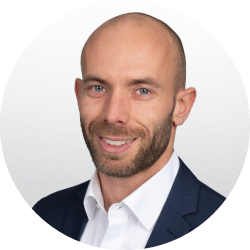
In smart electronics manufacturing, precise and continuous data capture across both manual and automated processes is essential for efficiency, quality assurance, and traceability. This presentation provides an overview of key challenges and solutions in process data acquisition, with a focus on enabling end-to-end visibility across the production environment.
- 09:50 - 10:20Electronic component reclamation as a strategy for supply chain resilience, quality assurance and sustainabilityStefan Theil - CEO - Factronix

The electronics industry is increasingly facing challenges such as component obsolescence, extended lead times, supply chain disruptions and growing sustainability requirements. At the same time, large quantities of fully functional electronic components are discarded due to product discontinuations, excess inventory or manufacturing fallouts.
Component reclamation and reconditioning provide a practical approach to addressing these challenges. By recovering components from existing assemblies or surplus inventories and restoring them through controlled technical processes — such as reballing, retinning, automated inspection and electrical testing — components can be safely reintroduced into manufacturing or service supply chains.
This presentation explores how component reclamation can serve as an effective strategy to mitigate supply risks, extend product lifecycles and reduce electronic waste. It also discusses the technical processes required to ensure quality and reliability, including advanced inspection systems, alloy conversion processes and automated refurbishment technologies.
Realworld case studies demonstrate how large volumes of reclaimed components have successfully been redeployed into production environments, helping manufacturers overcome supply constraints while achieving cost and sustainability benefits.
The presentation highlights component reclamation as an emerging third sourcing strategy alongside new production and the secondary market, supporting both supply chain resilience and circular electronics initiatives.
- 10:25 - 10:55Rethinking production logistics – modular, scalable, automated, flexibleDavid Kammerer - smartTec GmbH
Ensuring the right material is available at the right time, in the right quantity, in the right place
and in the right condition — while avoiding waiting times — is essential for efficient
production. In this talk, using a professional storage and logistics solution as an example, we
explain how the controlled handling and storage of moisture-sensitive components,
traceability of assembled parts, and continuous inventory via an inline component counter can
be implemented in a robust, production-ready manner. A modular combination of software
and hardware must provide an “individual standard” that can be tailored to real-world requirements. - 11:00 - 11:30Advanced scheduling as a competitive advantage: AI-driven planning in electronics manufacturingMira Grünhaupt - PAILOT GmbH

In electronics manufacturing, highly complex dependencies converge every day: workforce capacity, machine availability, changeover times, material shortages, and last-minute schedule changes. Yet in many factories, detailed scheduling is still managed through Excel sheets, ad-hoc coordination and improvisation — with familiar consequences: limited transparency, unstable processes, missed delivery deadlines and increasing pressure on teams.
This talk explains how AI-supported advanced scheduling can turn complexity into control, and why implementing intelligent planning systems should not be approached as a purely IT-driven initiative, but as a company-wide transformation.
Key questions addressed include:
* Which structural challenges shape advanced scheduling in electronics manufacturing?
* How do evolutionary algorithms outperform classical heuristics — in real-world production environments?
* Which cultural and organisational prerequisites are critical for successful implementation?
Using the practical case study of Fritsch Elektronik, the presentation demonstrates how a mid-sized electronics manufacturer achieved measurable improvements in on-time delivery, resource utilisation and production stability through AI-based scheduling.
- 11:35 - 12:20The global memory market resetNikolaos Florous, Ph.D. - Semiconductor & Electronics Expert | Global Product Marketing Director - Memphis Electronic
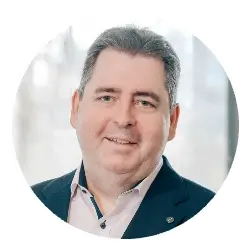
The global memory market is undergoing a paradigm shift. Once viewed as a commoditised, cyclical market, memory is now increasingly shaped by AI-driven demand concentration, geopolitical realignment, and unprecedented capital intensity. The result is that legacy and advanced memory are both experiencing shortages, but for entirely different reasons.
In this session, Nick Florous provides a clear, application-centric, and fact-based outlook on the global memory market—moving beyond short-term noise to explain the structural forces redefining supply, pricing, and investment behaviour.
- 12:25 - 12:55Embedding of components in PCBs and packages as a key enabler for enhanced electronic devicesDr. Dimitri Kokkinis - Business Development / Key Account Manager - CICOR
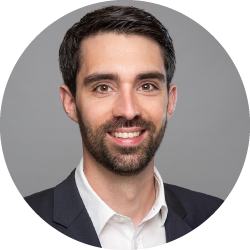
Electronic systems are expected to deliver increasing functionality while becoming smaller and lighter. Conventional PCB technologies are reaching their physical and technical limits in meeting these demands. Embedding passive components and active bare dies directly into multilayer PCBs and modules provides a promising path towards higher functional density, improved electrical performance, and reduced assembly height without increasing the footprint.
Cicor has developed an advanced embedding technology that integrates ultra-thin bare dies and passive components within high-density multilayer substrates. The presentation outlines the manufacturing concept and its potential to enable next-level miniaturization in advanced electronic applications.
- 13:00 - 14:00Diverging paths: how Europe fell behind in the global EMS industryDieter G. Weiss - CEO & Founder - in4maEric Miscoll - CEO - EMSNOW
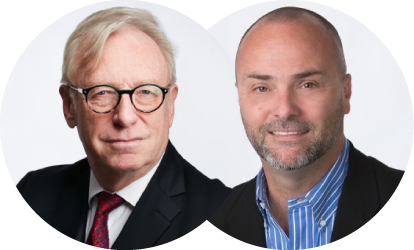
2025 was expected to be a year of recovery and growth for the European EMS industry — a hope that ultimately did not materialize. Instead, the market stagnated in Europe, while EMS companies in the Far East and Southeast Asia achieved double-digit growth rates. This presentation will quantify these developments and explain what happened in the global EMS industry compared to Europe.
- 14:05 - 14:35Enhanced quality and cost efficiency through laser depanelingDirk Rettschlag - Technical Sales - LPKF

More powerful laser sources and optimized processes are driving a continuous increase in performance in laser depaneling. This progress is enabled not only by higher output power, but also by very short pulse durations and ultra-fast beam deflection technologies, such as the patented LPKF Tensor technology. As a result, the price–performance ratio continues to improve, while the range of economically viable applications is steadily expanding.
Laser depaneling now stands out not only for its technological advantages—such as high precision, stress-free processing, and low dust generation—but also for its strong economic efficiency. This presentation explores how performance has improved through increased laser power and the integration of advanced deflection technologies, and how the full potential of laser depaneling can be unlocked through targeted measures, for example minor design optimizations. The impact of higher laser power and beam deflection technologies on expected temperatures near the cutting channel, as well as their relevance for SAC and LTS solder alloys, will also be addressed.
- 14:40 - 15:10Miniaturization and fineline PCB productionDaniel Schulze - Director of Application Engineering - DYCONEX
Lines and spaces down to 18 µm can be realized in advanced subtractive processes, which is already beyond industry standard of around 50 µm. Moving forward to additive plating technology, finer structure features below 10 µm can be achieved. To fully benefit from the miniaturization advantages, related processes such as via size, material thickness, alignment accuracy and adhesion must be considered. We discuss specific applications where fine-line subtractive and semi-additive plating (SAP) offers significant advantages, such as in the production of flexible electrodes, passive structures, substrates for fine-pitch ultrasound transducers, and miniaturized components. Additionally, we analyze the challenges faced in implementing SAP for such applications, including available fabrication process options, cost considerations, and strategies to overcome the challenges of high-mix, low-volume production.
- 15:15 - 15:45Growth despite crisis – how modern electronics manufacturing remains competitive in GermanyGeorg Denkinger - Business Development - Leuze electronic assembly GmbH
Rising energy costs, labour shortages, increasing bureaucracy and global price pressure are creating ever greater challenges for electronics manufacturing in Germany. Nevertheless, some EMS companies continue to grow. What makes international competitiveness possible today in a high-cost environment?
The speaker will demonstrate how productivity, automation, digitalisation and technological expertise can strengthen modern electronics manufacturing. He will also address how the role of employees is changing in increasingly data-driven and automated production environments.
During the lecture, he will further focus on the growing importance of customer partnerships, technical consulting and collaborative manufacturing models — because competitiveness today is no longer defined by cost alone, but by speed, flexibility, quality and cooperation.